

Seeking out the
5000 greatest films
in a century of cinema


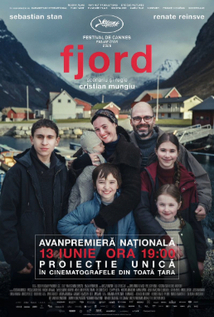

Fjord


Produced by Cristian Mungiu, Andrea Berentsen Ottmar, Mikkel Jersin, Emilia Haukka, Kristina Börjeson, and Mimmi Spång
Editing: Mircea Olteanu
Music: Kaspar Kaae
Release Date: 13 June 2026
Aspect Ratio: 2.39 : 1
Color: Color
Cristian Mungiu, the provocative Romanian filmmaker behind the Palme d’Or-winning 4 Months, 3 Weeks and 2 Days, is back with his second film to claim that prestigious award, a legal thriller/family drama loosely inspired by the story of the Bodnarius, a couple whose children were forcefully taken from them by the Norwegian Child Welfare Services. The film stars two of today's most dynamic actors, Sebastian Stan and Renate Reinsve (who also co-starred two years earlier in A Different Man), as a Romanian-Norwegian couple whose strict, conservative Christian beliefs and practices draw scrutiny after they move to the wife's progressive Norwegian hometown.
Shot in the director's typically austere style, but without the lush settings of his Beyond the Hills or Graduation, Mungiu places the typically liberal audiences for pictures like this into the uncomfortable position of having our sympathies directed towards the harsh, homophobic, Christian family against the progressive-to-the-point-of-fascism state authorities, who use their unchecked power to take the couple's five children, one a nursing infant, away from them, placing them with foster parents who don't practice their religion or honor their customs, and subject the couple to a civil custody trial and a criminal child-abuse case after mysterious bruises on the eldest girl are noticed by a teacher at school.
The film is riveting in a nut-and-bolts, emotionally repressed kind of way. Each character does their best not to rock the boat, though Stan's patriarch struggles with it. We feel infuriated by the hypocrisy, cultural insensitivity, and context-free authoritarianism administered by the "right-thinking" liberal government, teachers, lawyers, and administrators. Mungiu doesn't overtly tell us who is right or wrong in the specific case; we don't know if the bruises on the girl were inflicted by her mother, as the state claims, or in some more innocuous way. Thus, we can't help but place ourselves in the parents' position and imagine how it would feel if something like this happened to us. And it's easy to imagine how we'd react if the ideological shoe were on the other foot. On that level, the film is extremely effective.
Less successful is the picture's somewhat muddled point of view. The film isn't told entirely from the parents' perspective. We occasionally see scenes from the teachers', the neighbors', and, most importantly, the kids' viewpoints. This imbalance matters because we don't see enough to answer our specific questions, but we see enough to judge these secondary characters without much context. We infer a good deal about the older kids' relationship with one of their neighbors, and it seems like a pretty important part of the narrative, but inference is all we get. For such a long film, that feels like a problem. I think the movie would have been stronger if it had limited the perspective to that of the parents. In that case, this might have been a film we'd be wrestling with for days and days after the screening. Unfortunately, the way Fjurd ends makes us almost dismiss it entirely the second the credits roll.
The Palme d’Or winner of 2026 is this provocative moral drama based on true events about a Romanian-Norwegian couple who immigrate to the mother's Norwegian hometown and have their children forcefully taken from them by the Child Welfare Services.