

Seeking out the
5000 greatest films
in a century of cinema


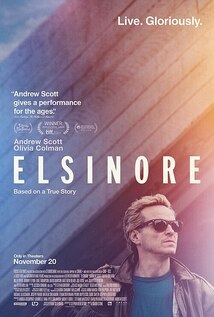

Elsinore



Produced by Mickey Liddell, Andrea Occhipinti, Carolyn Marks Blackwood, Gabrielle Tana, Andrew Scott, Pete Shilaimon, and Stefano Massenzi
Editing: Valerio Bonelli
Music: Stefan Gregory
Release Date: 20 November 2026
Aspect Ratio: 2.39 : 1
Color: Color
I'm pretty sure I was the only ten-year-old who absolutely LOVED the Hugh Hudson/David Puttnam film Chariots of Fire, which swept the nation and won Best Picture at the Oscars in 1981. I saw it five times in the theater, and I'll never forget dragging a school chum to one of those screenings (he didn't hang out with me much after that day). What did this already staunch-agnostic, sports-hating, narrative-obsessed kid love so much about a rather meandering British prestige picture about Olympic runners wrestling with their religious beliefs and identities? Well, of course there was the amazing Vangelis soundtrack and the incredible scenery, but most of all, there was the wonderful cast with their wonderful accents. I knew well before I was ten that I was a cinephile, but this film was what made me realize I was also an anglophile long before I discovered there was such a word. I could listen to the actors in Chariots of Fire for hours (and I did, through many visits to the cinema and later home viewings on VHS, LaserDisc, DVD, Blu-ray, and a coveted 35mm British print). My favorite voice to listen to belonged to Scottish actor Ian Charleson, who played Eric Liddell, the devout Christian who gives up his family's missionary tradition to pursue competitive running. Over the decades, I've become well-attuned to Charleson's distinctive cadence and intonation, even though I really only know him from Chariots and, to a lesser extent, Gandhi.
All that preamble is to say that I didn't know how I would react to Elsinore, a film about the final months of Charleson's life as he is given the opportunity of a lifetime to replace Daniel Day-Lewis in Hamlet at the National Theatre right after discovering that he is dying of AIDS. Andrew Scott stars as Charleson. The acclaimed Irish actor is best known for TV series like John Adams, Foyle's War, Sherlock, Fleabag, and Ripley, though I only know him as the star of Andrew Haigh's All of Us Strangers and for his excellent performance as Richard Rodgers in Blue Moon. While I'm not a fan of biopics or fictionalized "based on real life" movies where actors play other actors, Scott hooked me from the very first minute of Elsinore. Even with the very best biopic performances, it usually takes me five or ten minutes to fully accept the actor as the person they're playing. Not so in this case. Scott nails that voice I know so well, and from that first moment on, I was instantly drawn into the character of Ian Charleson that Scott created.
The general storyline of Elsinore will be familiar to movie-goers of my age, the generation that came of age at the height of AIDS awareness. I've seen a lot of movies about gay men dealing with that cruel epidemic and the myriad ways our society reacted to it and was changed by it. Elsinore has many of the tropes of those movies, but it also finds a number of fresh angles. It's been a long time since we had an AIDS drama, now that the disease is effectively managed via Antiretroviral Therapy. Elsinore transports you back to the early-AIDS era and explores several political issues and viewpoints of that time in LGBT history without ever feeling didactic.
Directed by Australian/Swiss theatre director, writer, actor, wunderkind Simon Stone, this is very much a film about the theater, the power of the theater, and the family the theater creates—a chosen family where many Queer folks have found a home. Elsinore may not be the most cinematic picture, but screenwriter Stephen Beresford (Pride) shapes the story into something far superior to the typical disease/disorder docudrama, and Stone delivers the goods through incredible performances.
I very much doubt I'll see a performance better than Scott's this year, but the supporting players are also magnificent. First and foremost, there is Olivia Colman as the HIV specialist who agrees to be Charleson's doctor, even though she doesn't agree with his goal of playing Hamlet, as such a supremely taxing role will most certainly shorten his life. Billie Piper is wonderful as Charleson's close friend, casting director Patsy Pollock, who makes him part of her family and cares for him when he's at his sickest.
David Dawson plays the new queer cinema pioneer Derek Jarman, who directed Charleson in his first movie, Jubilee. Good Lord, what Dawson is able to do in his few brief scenes. This is the type of role that never works in this kind of movie. A real-life figure with an opposing perspective to the protagonist, who gets trotted out to make some very shallow points while also having to contextualize and encapsulate in five minutes of screen time all the nuances of the specific time period for all audiences, both those who lived through it and those too young to remember. It's the most thankless kind of role, but Dawson (and Stone, Beresford, and Scott) make it work beautifully. And don't get me started on Peter Mullan and Georgie Glen as Charleson's father and mother. This is a master class in how great actors can come in late in the second act for minimal screen time and lock you in for the rest of the film.
There are a number of things I wish Elsinore did better. I never understood the timeline, which feels important to this story. Just how long did this production of Hamlet go on? Did it simply shut down for three weeks while Charleston rehearsed with the cast that was already in full swing? What was on stage during that time? How were this company and this production able to wait for Charleston when he was in the hospital? Maybe it's because I look at things through a producer's eyes, but I'd really like to understand how the National Theatre works. Most shows at most theaters have a run, and then the theater needs to move on to the next production on its schedule. So how did this aborted, then reimagined, show start and stop? I absolutely loved seeing Scott's performance as Charleston as Hamlet, but I would have preferred seeing fewer but longer stretches of that work, rather than the choppy extended montage we get.
I had a few other complaints, but thinking back on the film, they barely seem to register. All I can see and hear when I close my eyes and think about the movie is how incredibly Scott inhabits this role, how much genuine humor Beresford is able to find in a movie that is essentially the year's feel-bad weepy, and how well Stone makes palpable an understanding of why any great artist would trade months or even years of their life for a chance to achieve a kind of immortality through their art. Elsinore is a feast and one of the year's most powerful pictures.
Andrew Scott gives the best performance by an actor playing an actor I've ever seen, in Simon Stone and Stephen Beresford's powerful chronicle of actor Ian Charleson's final months, during which he fought off AIDS long enough to play Hamlet at the National Theatre.