

Seeking out the
5000 greatest films
in a century of cinema


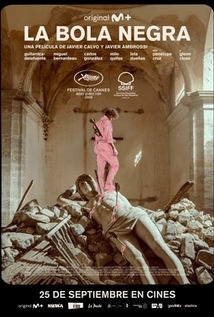

LA BOLA NEGRA
The Black Ball



Produced by Javier Ambrossi, Javier Calvo, and Jorge Pezzi
Editing: Alberto Gutiérrez
Music: Raül Refree
Release Date: 25 September 2026
Aspect Ratio: 1.85 : 1
Color: Color
As with many years in cinema, an unintended common theme seems to emerge. The one I've noticed so far in 2026 is films that question and/or reinforce the value of art to both society at large and to individual identity. With the onset of A.I., it's not surprising that many of the year's most interesting movies—All of a Sudden. Fatherland, Elsinore, Late Fame, Possible Love, Teenage Sex and Death at Camp Miasma, The Christophers, Minotaur, The Debut. Power Ballad, I Play Rocky, Verity, Bitter Christmas, Digger, and many of the year's best documentaries—explore this theme either directly or indirectly. La bola negra, a film inspired by an unfinished work by Federico García Lorca and a play by co-writer Alberto Conejero, joins this company, as it is most effective when exploring this theme of how art can provide meaning and understanding to both personal choices and world events.
Javier Calvo and Javier Ambrossi weave an intricate triptych of intertwined lives lived in three very different eras. The drama follows three men intimately linked by several factors, but the key commonality is their sexuality. The movie is Spain's entry for Best International Feature Film, and it has been racking up accolades since it premiered at Cannes. I've been somewhat baffled by the rapturous reception from so many folks who see it as some kind of masterpiece, and by the harsh rejection from others who view it as an obscene perversion of history that makes the Spanish Civil War seem like a Calvin Klein underwear ad. Neither is true. This is no more or less contrived, revisionist, intriguing, and muddled than dozens of other historical fictions.
I found the first hour of this 159-minute epic to be a bit of a slog, but it got much more interesting as the various stories started to come together. It works best when the contemporary character, Alberto (Carlos González), is investigating the unfinished, eponymous play, which ties together most of the other narrative and thematic threads. The frustratingly repetitive nature of much of this film makes it hard for me to imagine wanting to revisit it, and yet, by the time it was over, I felt myself curious to go back and see the whole again once I understood how it all fit together.
This intricate triptych of intertwined lives lived in three different eras follows three men intimately linked by several factors and starts slowly and ponderously but comes together effectively by the third act.