
Seeking out the
5000 greatest films
in a century of cinema



2024 was an odd year for the pic’tchas. It followed a stellar year for movies, but '23 was a rough time for film production due to the protracted strikes, first by the Writers Guild of America and then the Screen Actors Guild. I had assumed these necessary labor disputes would result in far fewer movies getting released in 2024, but there was still a solid crop of films of all budgets, genres, styles, and levels of quality. Still, I can't remember a year in which critical consensus seemed to zero in so quickly on ten or so films they deemed “awards worthy” and then commence elevating them to their best-of-the-year lists and awards categories. There are only 50 films nominated for Oscars this year, partly because the various branches of the Academy seemed to limit their nominations to the ten or twelve anointed films much more than they usually do.
The earliest front-runner, the Palme d'Or-winning Anora, unlike some early critics' darlings of many other years that gradually fall out of favor as the month wears on, now, a week before the Academy Awards, remains positioned as the front-runner. It didn't stay there all year like 2023's Oppenheimer. Acclaimed films like The Brutalist, with its epic, old school style and subject matter, the Bob Dylan biopic A Complete Unknown, a rare '24 example of the type of movie Oscar voters usually go for, and the French gender-bending, genre-blending Emilia Perez, which scored the largest number of nominations, often seemed more likely winners than a 138 minute comedy about a sex worker made by an outsider director who the Academy clearly respects but didn't, at least at first, seem ready to embrace whole-heartedly. But after winning the top prize at both the Producers Guild and the Directors Guild of America, as well as some Indie Spirits and a couple of BAFTAs, Sean Baker's sweet but hard-hitting screwball feels like it will be the big film of 2024.
Anora would be a fitting Best Picture for '24. For one thing, it actually is one of the year's best films (which always helps). But it is also indicative of this year in movies, especially award-winning feature films. 2024 saw dozens of good movies, but few great ones. And the word that, for me, most sums up nearly every nominated 2024 film has to be “overrated.” I don't say this to be snarky, but since awards bodies have to nominate and award movies every year, it goes without saying that in a year of mostly good, pretty good, and not so good movies, the good ones get elevated to lofty heights; joining the ranks of great films from past decades that are remembered for their excellence, as well as those pointedly subpar films from past decades that most sane people view as evidence that the Academy is full of crazy, out of touch elitists.
Anora is in my top ten films of 2024, but it barely even cracks my top 4 films of writer/director Sean Baker's eight movies. Similarly, the picture that currently sits at the top of my list of 2024, The Brutalist, is a film I would probably rank below James Grey's similarly themed The Immigrant, which was my twenty-fifth best film of 2013. Still, the lack of obvious choices means there are a few unusual nominees for the Academy. Notorious for dismissing genre movies, this year saw The Substance, a body horror picture with a spectacularly gross Grand Guignol finale, score five nominations, including four in the most prestigious categories. The Substance tracks the type of comeback narrative Oscar voters love, but the surprise Best International Feature nominee The Girl With The Needle, while not an out-and-out horror movie, is the type of film that would normally score at most a cinematography nod from these folks.
As is often the case, the films the Academy has selected as praiseworthy fall within the full range from my top film to my (almost) bottom film. So it's not an unusual year in that regard. I would say that this year's crop of nominated short films was more consistently strong than the nominated features. But another unusual aspect of 2024 is that few awards are all sewn up. Once The Substance turned out to be a surprise critical hit, Demi Moore emerged as the front-runner, and Kieran Culkin has remained a lock for Best Supporting Actor since the first screenings of A Real Pain. But other than these, this could be a difficult year to predict in terms of who will win most of the awards.
There were also very few “snubs”, dust-ups, or kerfuffles this year. The two most overlooked performances were Marianne Jean-Baptiste in Mike Leigh's Hard Truths, a performance most critics love in a film they like very much, and Angelina Jolie in Pablo Larraín's Maria, a performance most critics respect in a film they think is pretty bad. There were only two controversies, one minor and one major. The one that didn't make too much of a dent was the revelation that AI had been used to “augment” the performances of Adrien Brody and Felicity Jones in The Brutalist. This lit up social media right before voting started, and righteous fools started to call for the two stars to be disqualified. When it was vaguely clarified that the AI tool Respeecher was only used to “refine these actors’ dialect,” people were not placated. In reality, all that occurred was that the film's editor, Dávid Jancsó, a native Hungarian speaker, used Respeecher to alter certain vowel sounds in a few scenes where the actors, who each did a lot of work with a Hungarian dialect coach prior to shooting, speak in that language.
While this tempest in a teapot illustrates how freaked out about AI people are (and should be), it also betrays how ignorant most folks still are about filmmaking, despite most of cinema magic having been completely deconstructed for even the most casual fan. After all, the vast majority of words we hear actors speak in a huge percentage of movies were not recorded at the same time their images were. And film editors have been cutting and pasting lines from different takes and fitting them into actors' mouths since the dawn of sound. Plus, nearly every film requires the actors to come back and revoice many of their lines for both production and performance reasons. Are the people calling for these actors to be disqualified because a computer was used to change the sound of a few E's and O's in less than 15% of The Brutalist aware that Tom Hanks's brother has done most of the multi-Oscar nominee's dialogue replacement for the past four decades? This is to say nothing of the ways computers have been used for the past thirty years to make actors look younger, slimmer, smoother, firmer, or grotesque, but people don't seem to take issue with any of that.
Another actor to benefit from Respeecher this year was Karla Sofía Gascón, but that issue was too insignificant to be noticed in the face of the larger controversy surrounding several social media posts the star of Emilia Pérez made between 2016 and 2019 that contained racist language and offensive jokes about a range of marginalized communities. In some of these comments, Gascón also aggressively disparaged the “woke” Academy membership for several of their decisions concerning Diversity, Equity, and Inclusion. These posts surfaced after the announcement of the Golden Globe nominations, of which Emilia Pérez received eight, including a Best Actress nom for Gascón. The actress's response to the coverage was to launch into an aggressively defensive stance, sabotaging her chance at getting back into the Academy's good graces and torpedoing her opportunity to make history as the first transgender woman to win Best Actress far more than the resurfaced tweets did in the first place. I ain't gonna lose any sleep over the fact that Gascón's personality and off-putting views seem to have tarnished the film she leads because Emilia Pérez is terrible by just about every measurement. (How do you say schadenfreude in Spanish? Or is it French? Who can tell with a movie as lost in space and time as Emilia Pérez?)
The run-up to the awards also unfolded when massive wildfires were devastating and destroying great swaths of Los Angeles County. These fires delayed the announcement of the nominees twice, and soon, many called for the Oscars to be canceled out of respect. But, again, like most social media-fueled reactions, the idea of canceling an event that employs thousands of LA residents when they are most in need of income makes little sense. Many who live in the city count on the lucrative awards season in much the way retailers rely on Christmas shopping to make their annual nut. But logic nearly always gives way to passion when it comes to high profile, celebrity-driven culture.
Similarly, my own passions and opinions, though I try to think them through far more than the average troll or cretin on the platform formerly known as Twitter, can get a bit heated every year that I sit down to make a ranked list of all the films the Academy has chosen to bless with their Oscar nominations. If I disparage one of your favorites, I hope you won't take it too hard. Film is the most subjective of all the art forms (at least, that's my opinion!).
-------------------------------------------------------------------------------------------------------------
#50: ALIEN: ROMULUS - 1 nomination, zero stars
Undoubtedly the worst of the year's nominated films, this inexcusably shallow, hollow, and unfaithful work of sub-par fan-fiction would rank as my least favorite film of the entire year if not for an amateur werewolf flick called The Forest Hills, which I watched only because it was Shelley Duvall's last movie. At least The Forest Hills felt genuinely created by human beings. If you told me that Alien: Romulus was penned and produced entirely by AI instead of by the talented director Fede Alvarez (Don't Breathe) and his regular co-writer Rodo Sayagues, it wouldn't surprise me at all. Alien: Romulus embodies what you might get if you had ChatGPT absorb the first four Alien movies and then attempt to create a hybrid— a film with all the memorable moments, character types, and concepts from the earlier pictures but devoid of any understanding of what made those elements so effectively scary, thrilling, and human. As for its nominated Visual Effects, everything is recycled from those first four movies, so I struggle to understand how it merits a nomination in any craft category. The film's sole original visual effects sequence, a zero-gravity escape where the acid blood of numerous aliens hang in the air like floating land mines the characters must navigate, doesn't even look good. Nothing about this year in film made me more despondent about the future of cinema than the general acceptance of this movie by critics and audiences as "perfectly good entertainment." How far we've sunk into accepting the absolute shit some studios served us as if it were acceptable entertainment.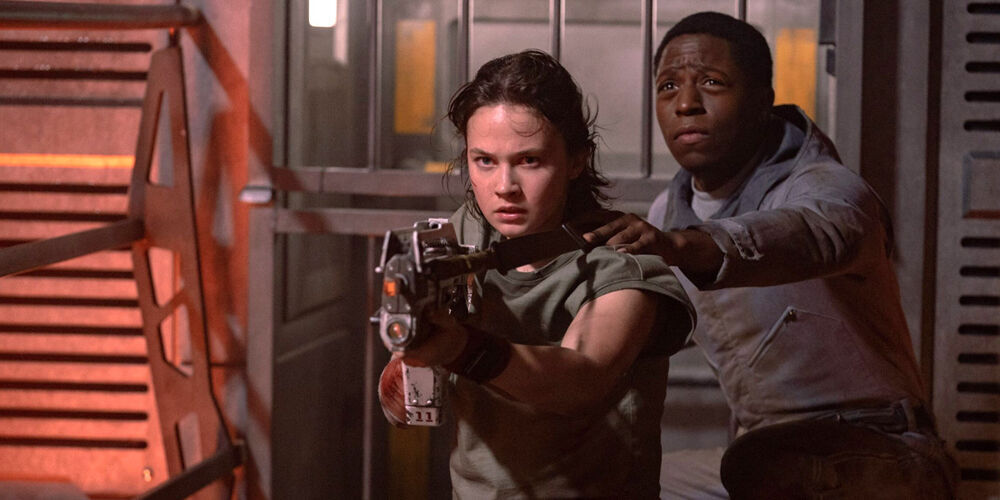
#49: EMILIA PERZ - 13 nominations ★
This year, Netflix's big awards push picture points out how out of touch the company is with audiences, if not with the Academy. The most successful streamer has always been a bridesmaid and never a bride when it comes to the Best Picture candidates it campaigns for. When Netflix bought this crime-thriller musical with a transgender protagonist made by the acclaimed French director Jacques Audiard (The Beat That My Heart Skipped, Rust and Bone, A Prophet), they thought they were getting the next Parasite, but it turned out to be the next Green Book. Emilia Perez became one of the year's most divisive movies the second it hit American screens, long before any extra-textual controversy came its way. With Academy membership now far more international than it used to be, it's not all that surprising that a movie like this would be nominated for Best Picture. And since both the old guard and newer, younger membership are always overeager to award a “first ever,” it's not surprising that star Karla Sofía Gascón would score a Best Actress nomination, making her the first ever openly transgender actor to be nominated for Best Actress.
These days, when the Academy nominates a film for Best Picture, Best International Film, and Best Actress, the specific member branches almost seem obligated to nominate its co-stars, director, and writer, too. This accounts for Audiard's triple nominations for Adapted Screenplay, Director, and Best Picture (along with one of his four fellow producers, Pascal Caucheteux). Neither Gascón nor Zoe Saldaña gives a bad performance in this movie. However, I'd believe you if you told me they and their other co-star Selena Gomez never met while shooting this movie. 2024 was plagued by some of the most artificial-looking pictures released in a single calendar year. Emilia Perez takes place in Mexico City, Bangkok, London, and other iconic locations, yet it all looks like it was shot in front of green screens in small, poorly lit studios. That doesn't mean all the actors were shot at different times and then composited into the same frames, but that would help explain why each of these leads feels like they're giving a decent performance but in an entirely different film from each other.
Thus, the plethora of craft nominations is all the more surprising. Best Editing, Best Sound, and even Best Make-Up/Hair are baffling enough, but Best Cinematography? This is one of the ugliest, most faux-looking movies of the year. Not only do the sets and computer-assisted environments look terrible, but Director of Photography Paul Guilhaume's lighting does these actresses no favors. The film attempts to blend genres boldly, and there are several interesting narrative and thematic ideas here, but the result is a tonally inept hodgepodge of elements that don't fit together. This is especialy true of the musical sequences, some of which are shot in that pseudo-gritty, street-level, handheld fake documentary style that seems to be trying to downplay both the fact that this is a musical and the fact that this is not shot in real locations, while others are done in the full-blown modern Hollywood musical style. But if a musical lives and dies by the quality of its songs, this movie is dead on arrival. I challenge anyone who's seen this movie, even two or three times, to hum one of its tunes. The songs are loud, flashy, and riddled with on-the-nose lyrics, but what most distinguishes them is their utter forgettablity. Of the two that have been nominated, "El Mal" and "Mi Camino," Saldaña's whisper-spoken-word "El Mal" is probably the music number that resonates the most. But these disposable tunes feel like the CGI equivalent of melody composition, and they all seem like they last less than 90 seconds, yet they wear out their welcome before they're halfway through. Like the synthetic, hollow shell of a movie that contains them, these are hardly Oscar-worthy.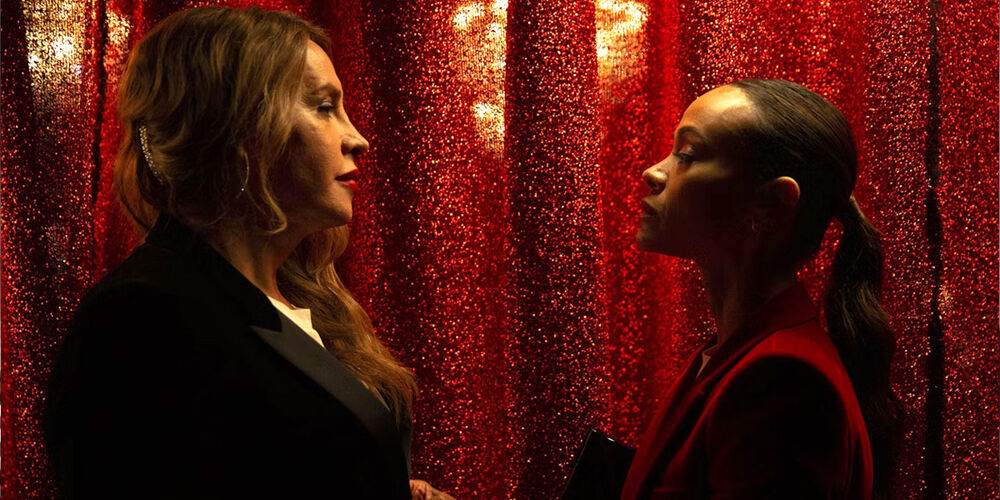
#48: WICKED - 10 nominations ★
If Emilia Perez illustrates how out of step with the zeitgeist Netflix is, Wicked reveals the same thing about me. Though it didn't crack the top ten highest-grossing films of the year, this movie exceeded all expectations about how it would fare at the box office. But it left me in a state of... unadulterated loathing. How anyone can take pleasure in this assaultive and insulting movie is beyond me. I get that people love the show, but I would think that loving the show would make the frantic and hurried yet labored, repetitive, and protracted approach to this film all the more annoying. Almost every craft nomination is baffling because the work that correctly went unnominated—directing, screenplay adaptation, and cinematography—undermined the interesting costumes, makeup and hair, and production design.
The most puzzling nomination is for editing since this is an atrociously cut film both in terms of narrative storytelling and the assembly of visual images. I didn't know the show going in, other than being somewhat familiar with a few of the major songs, but even these numbers, like “ Popular” and "Defying Gravity," are chopped up and truncated, with various bits of physical business, dialogue, and action constantly interrupting the songs. How does this serve those who are devoted to the stage show? When you watch your favorite musical, you want to revel in its production numbers, not have them consistently interrupted by a director showing you some flashy effect or having the performers engage in behaviors we've already seen their characters perform a dozen times. What shocked me the most about Wicked is that Cynthia Erivo and Ariana Grande managed to deliver solid, engaging performances despite being bogged down in such an inept production while portraying woefully underdeveloped one-dimensional caricatures. That they make these characters enjoyable at all makes their acting nominations well-deserved.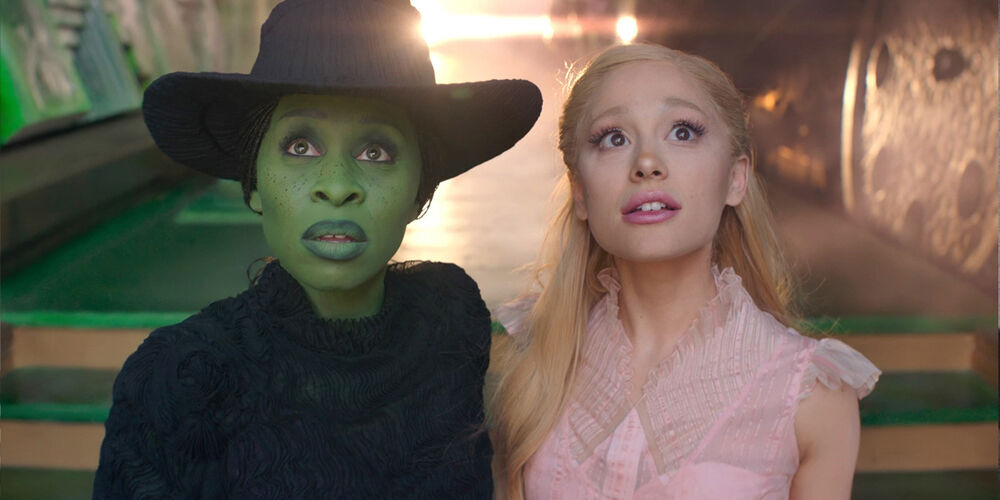
#47: ANUJA - 1 nomination ★★
This year's crop of Oscar-nominated live-action shorts was the best of the three 2024 short film collections, even though many of them felt like vignettes rather than complete stories with full beginnings, middles, and ends. This little movie from India certainly plays more like a narrative snippet than a full story, yet it doesn't seem like one of those shorts that's made as a demo for a larger feature. The story follows two young sisters who work as seamstresses in a sweatshop. The younger sister has the opportunity to attend a boarding school, but her cruel boss wants to keep her under his control so she can use her amazing math skills to do complex calculations, I guess because he previously needed to use a calculator? The film places its pre-teen protagonist in an impossible dilemma, but writer/director Adam J. Graves seems to use this as an excuse to avoid resolving his story. The film simply ends, leaving us to do much of the storyteller's work ourselves. The two sisters share a lovely relationship and genuine chemistry, but this screenplay feels very underdeveloped.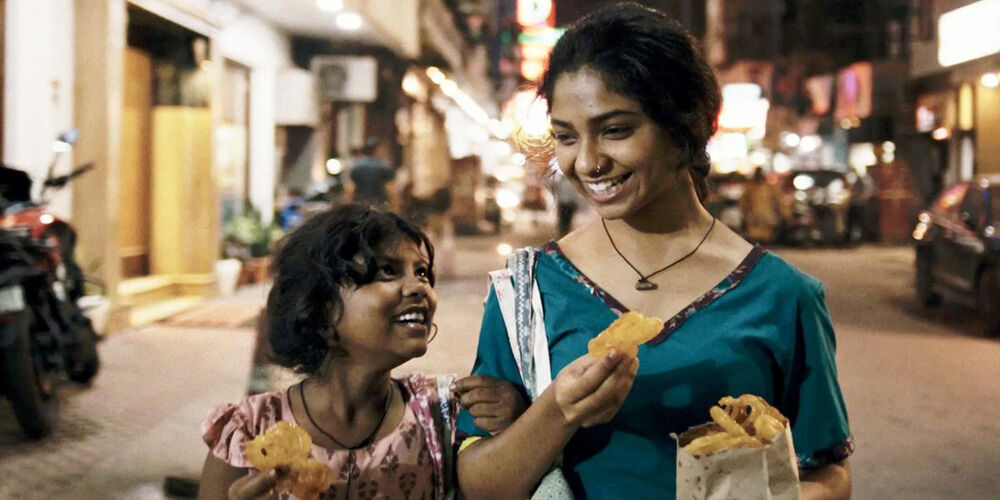
#46: A DIFFERENT MAN - 1 nomination ★★
Sometimes I feel like there are only two kinds of narrative features: movies that seem like the filmmakers have a story to tell in which rich themes emerge from the writing, shooting, and editing process, and movies that feel like the filmmakers start with a theme or statement they want to convey, leading them to craft a rigid, forced, artificial narrative to serve that initial idea. A Different Man exemplifies the latter. Aaron Schimberg clearly has points to make about self-loathing and contemporary American obsessions with physical appearance, identity, and trauma. However, the story he concocts to convey these points— about a facially disfigured wannabe actor who undergoes a magical treatment that transforms him into a handsome man, only to lose the opportunity to play a role based on his old self— is so contrived in its execution that the themes fail to resonate with any real power.
Schimberg's prior film, Chained for Life, is set in the world of low-budget filmmaking, and the reality depicted in that movie feels entirely credible. In this picture, however, the portrayals of the way medical procedures are performed and the manner in which off-off-Broadway theater is produced both feel like a fantasy construct. It's not that the events of this movie couldn't have unfolded plausibly or been told in a more allegorical way, but the writing here feels like it was translated from another language by someone who doesn't fully grasp the original text's dialect. While watching A Different Man, it's not hard to envision how this script could have unfolded in a way that would tell the same story in a more tenable or fantastical manner, allowing viewers to draw their own conclusions about its meaning.
However, the nomination here is for Make-Up and Hair, which I assume is specifically for the facial prosthetics Sebastian Stan wears until his character, Edward, undergoes his magical transformation. The look seems to be directly inspired by his co-star Adam Pearson, an actor with neurofibromatosis, so that when Edward meets Pearson's well-adjusted and well-liked Oswald, he sees the person he could have been in his genial rival for the lead int he play. This aspect of the film works well, making it a worthy nomination.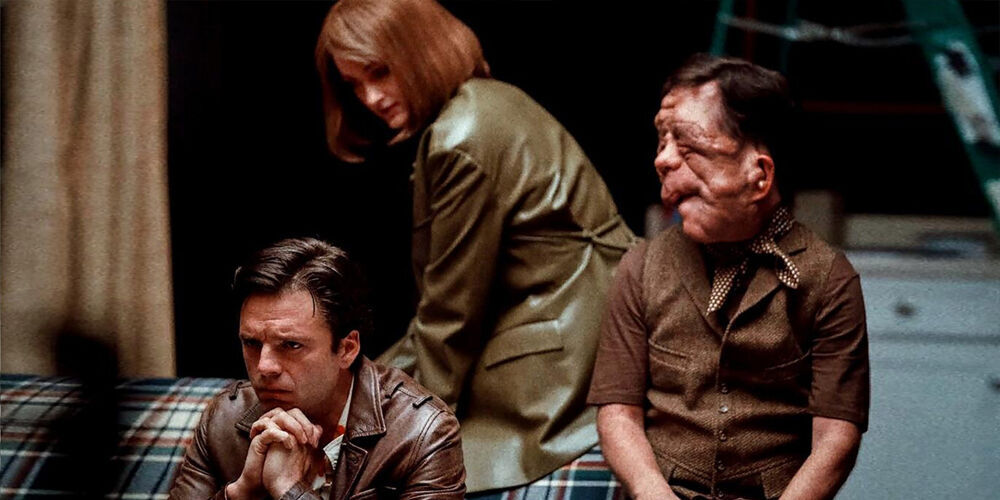
#45: BETTER MAN - 1 nomination ★★
As with Wicked and A Different Man, I seem to be out of step with the vast majority of folks I've read and spoken to who love this musical biopic about English pop singer Robbie Williams. However, this is an utterly generic rock 'n' roll docudrama that is only made unique because Williams is portrayed as a CGI monkey. This fantasy element goes uncommented on by everyone in the film. While I will admit that it's more entertaining to watch a CGI monkey singing, dancing, and doing drugs (what, no sex scene???) than it is watching some actor made up to look like a known celebrity, the novelty wears off real fuckin' fast. As for the nominated VFX, I will concede that among the dozens and dozens of anthropomorphized monkeys rendered through motion-capture performance technology that have littered the screen in the past two decades, this is one of the best.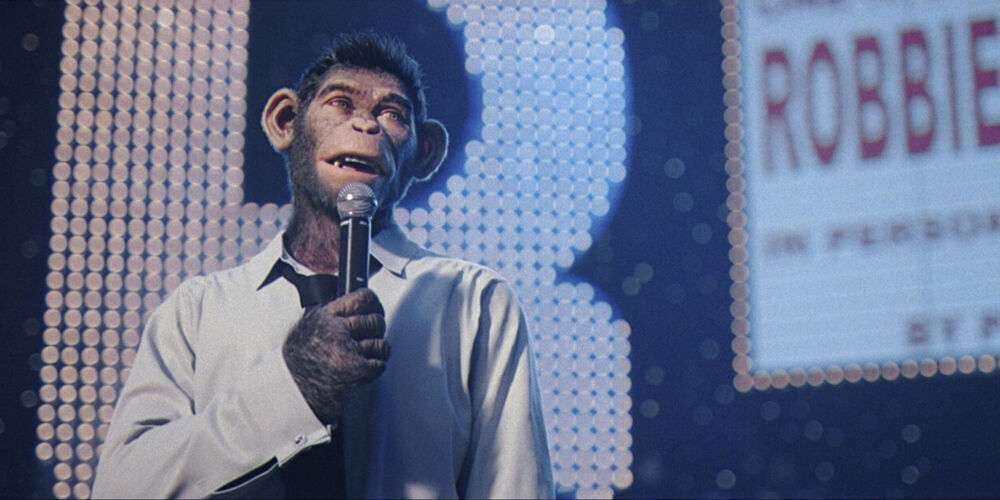
#44: MEMOIR OF A SNAIL - 1 nomination ★★
2024 was a terrible year for animated features, but the Academy still managed to nominate a few unusual and interesting films in this category. While the majority of what got cranked out were sequels and other IP, like Moana 2, Despicable Me 4, Kung Fu Panda 4, Mufasa: The Lion King, The Garfield Movie, and Justice League: Crisis on Infinite Earths Parts 1, 2, and 3, the Academy mostly went for more quirky, original films. You can't get much more quirky or original than Adam Elliot's semi-autobiographical story of a dejected Australian misfit girl forcibly separated from her beloved twin brother after they're orphaned. While the movie has charming, inventive character design, a solid voice cast, and a delightful handmade quality that I really appreciated, this is an almost comically miserablist work of trauma-fetishization that plays like an animated adaptation of a Hannah Gadsby stand-up special, or maybe Debbie Downer the Movie.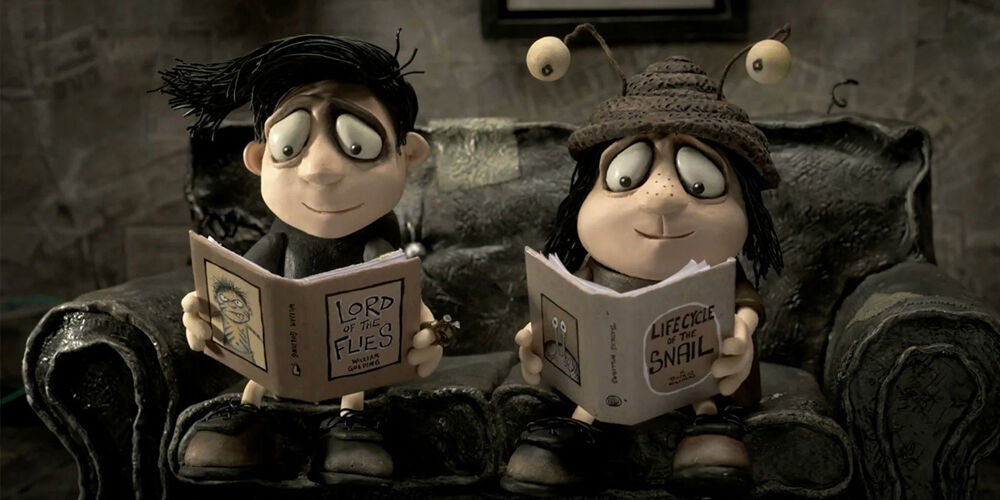
#43: THE SIX TRIPLE EIGHT - 1 nomination ★★
Tyler Perry's barely competent TV-movie-style portrayal of the only all-Black, all-female battalion that entered the European theater near the end of World War II is the kind of movie that will either make you glad this story got told or infuriate you because this story got told so poorly. The movie is based on a WWII History magazine article by Kevin M. Hymel called "Fighting a Two-Front War." It chronicles the efforts of the 6888th Central Postal Directory Battalion, which was tasked with sorting through a backlog of 17 million pieces of undelivered mail to boost morale during a critical period in the conflict. These ladies deserved better than this lazy, schmaltzy, amateurish production, but they do get a reasonably decent song out of it.
The Best Original Song nominee "The Journey," performed by H.E.R., is this year's seemingly obligatory Diane Warren belter, marking the composer and lyricist's fourteenth nomination. Two years ago, Warren was awarded an honorary Oscar for her many musical contributions to films—Starship’s "Nothing's Gonna Stop Us Now" from Mannequin in 1987, Aerosmith's "I Don't Want to Miss a Thing" from Armageddon, Lady Gaga's "Til It Happens to You" from The Hunting Ground, and many more. However, her last seven song nominations have felt less like deserving work being recognized and more like the music branch is determined to get this talented woman a competitive Oscar. So it's nice that this song, although it's no "If I Could Turn Back Time" (also by Warren), feels Oscar-worthy, especially in a year filled with so many terrible musicals.
Warren writes songs for people who love to SING— Cher, Celine Dion, Belinda Carlisle, Taylor Dayne, Michael Bolton, LeAnn Rimes, Taylor Swift— not for auto-tuned actors faking their way through production numbers in films that seem to do everything possible to conceal the fact that they're musicals at all. How much would I love to see this year be Warren's year? If she wins over the favored, almost anti-musical songs of Emilia Pérez, it could be the highlight of the broadcast!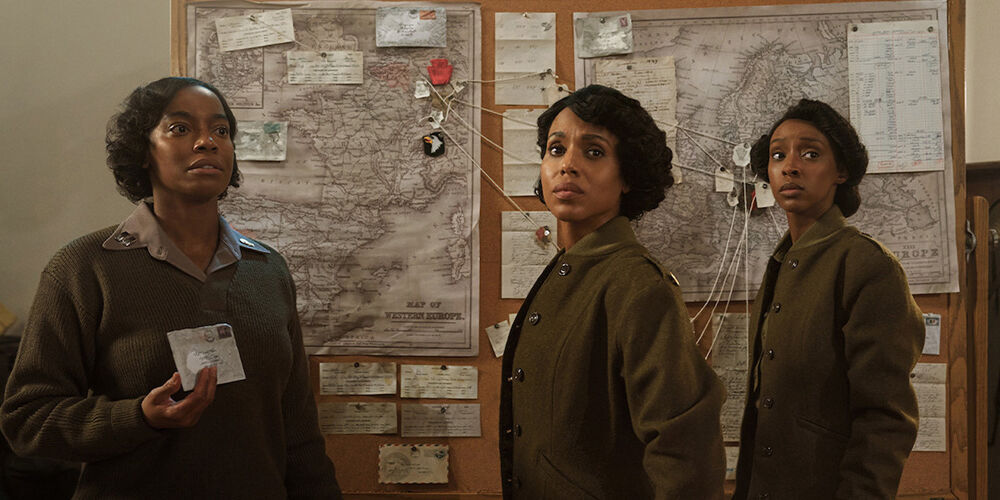
#42: NOSFERATU - 4 nominations ★★
I didn't feel as alone this time regarding my disappointment in Robert Eggers' fourth work of historical fiction. Though it was a substantial hit, many I know were almost as underwhelmed by the film as I was. As mentioned in my review, I don't particularly enjoy any adaptations of Bram Stoker's Dracula, a book I find deceptively uncinematic. However, my critique of this version of Stoker's story—which is equally based on F. W. Murnau and Henrik Galeen's 1922 silent German Expressionist unofficial adaptation of the book—extends to all the various crafts for which it has been nominated. The cinematography, costumes, production design, and make-up and hair are striking but not in a way that enhances the story; they almost serve as a distraction. This isn't the only movie this year where I felt the visual aesthetic overwhelmed the narrative. It's a curious feeling, as I love film noir, German expressionism, gothic horror, and movies shot on 35mm film. Still, while I appreciate the level of work that went into this Nosferatu, none of it engaged or moved me.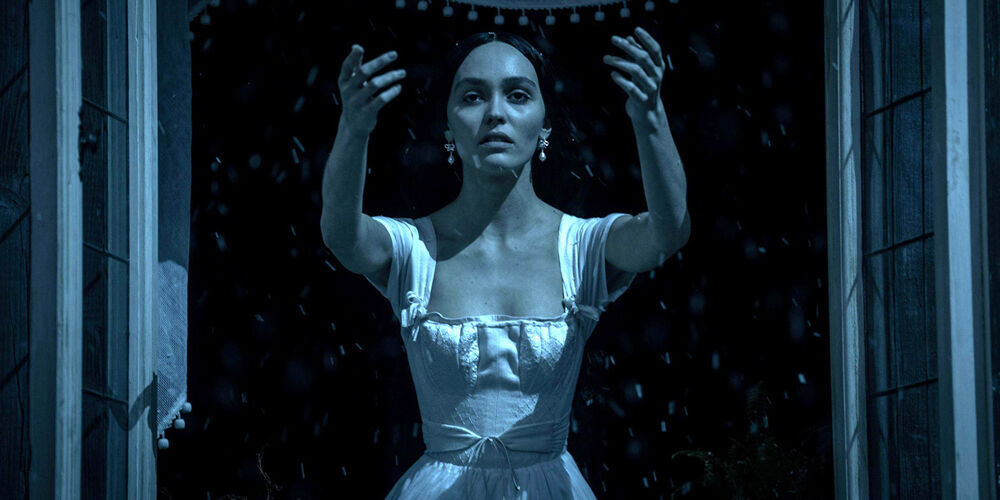
#41: THE SUBSTANCE - 5 nominations ★★
This is one of those movies that, as soon as it proved a hit, seemed like a lock for several awards, despite it being an unusual type of movie for the Oscar crowd. Not only do its themes of contemporary society's unhealthy obsession with youth and physical perfection resonate strongly with actors, who make up the Academy's main voting body, but the comeback story of sixty-one-year-old star Demi Moore is an awards narrative few can ignore. I strongly dislike this movie, yet you can bet I'm rooting for Moore to win, and she's one of the year's few shoo-ins. She's always been undervalued as an actress, but I’ve loved her work ever since No Small Affair and About Last Night... (two '80s comedy/dramas as underrated as she is). I'd have loved to see her nominated for Ghost, the role that made her a superstar in 1990.
Moore's savvy and commendable publicizing of her own career struggles, organic bodily changes, and physical regenerations over the decades, alongside her public struggles with being an aging female movie star, add extra-textual depth to the picture that I think many have confused with good screenwriting. While I can't fault writer/director Coralie Fargeat's nomination for director. I consider the film the directorial equivalent of a sledgehammer, but I know many love this kind of over-the-top style rich in winking homages to iconic (and vastly superior) films, delivered with that bewildered, what-the-fuck-did-I-just-watch tone. However, a Best Original Screenplay nomination for a script that is demonstrably terrible on every level is really infuriating.
The Substance has a lot to say, and its themes are significant, but the script undercuts those themes at every turn with every choice. The premise itself makes no sense. The story follows a female TV star well past the point where the industry usually replaces women her age with someone much younger. When she sees the writing on the wall, she opts for a drastic solution upon discovering an underground product called The Substance, which allows the user to grow a second, younger body that will live their life on alternate weeks. However, this is not a case of a shared consciousness between two bodies; what The Substance offers is a chance to cut your life in half and give it to a shallow, selfish alter ego over whom you have no control. This isn't a Jekyll and Hyde story; it's a Dorian Gray story, but one that expects us to believe someone would voluntarily choose to become the portrait of Dorian Gray hanging alone in a dark attic rather than the eternally youthful Dorian Gray himself. Even if Fargeat's protagonist doesn't fully grasp what she's getting into, why would anyone who has used The Substance ever recommend it to anyone else unless they were motivated by spite or revenge?
This central story problem is never addressed. In fact, Fargeat doubles down on the flawed logic with two of the other characters she introduces—and this is a film with fewer than seven people in it, all of whom are shallow representations of negative personality traits rather than full-blooded, multi-dimensional characters. This lack of human representation undermines the film’s themes and reduces what should be sharp feminist subtext to simplistic and overt messaging. Still, with Demi Moore at its core, the film can make an almost unlimited number of poor narrative choices, and it doesn't really matter. In fact, the bigger and more outrageous the movie becomes, the less it needs to worry about crafting its message in a clever way. This is a film that wants to make you feel things on a gut level. Each sequence feels like a punch to the stomach that doubles you over, and when you look back up, dazed and a little confused, all you can see is the filmmaker's message plastered across every frame.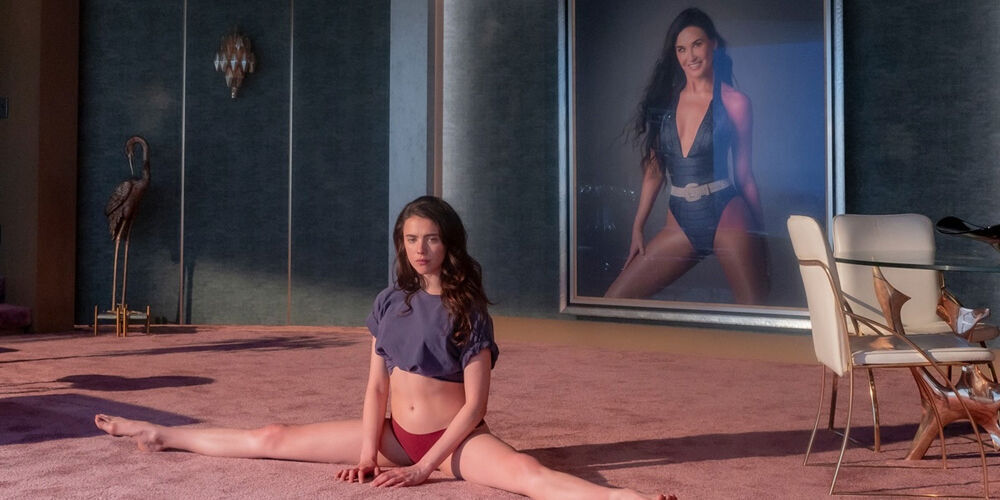
#40: ELTON JOHN: NEVER TOO LATE
The latest fawning, for-fans-only documentary/concert film about a music star reflecting on his life is this year's American Symphony. What? You don't remember American Symphony from last year's Oscars? That's OK; you won't remember this film in a year, either. Most of the content covered in this Disney+ documentary, co-directed by Elton John's husband, David Furnish, is already explored in the horrendous 2019 musical biopic Rocketman, which Furnish produced. I like Elton John, and I enjoy his music, which makes it all the more disappointing that such a unique performer would end up with such bland and generic movies as his cinematic legacy. Fortunately, the albums and the great songs that he and Bernie Taupin wrote will always be available, and many of them are featured in this film. We also get to hear the obligatory original song written for the end credits expressly to get an Oscar nomination. It will come as no surprise that, while "Never Too Late," co-written by John, Taupin, Brandi Carlile, and Andrew Watt, is not a terrible song, it's just unexceptional, unmemorable, and pales in comparison to the great tunes that populate this documentary.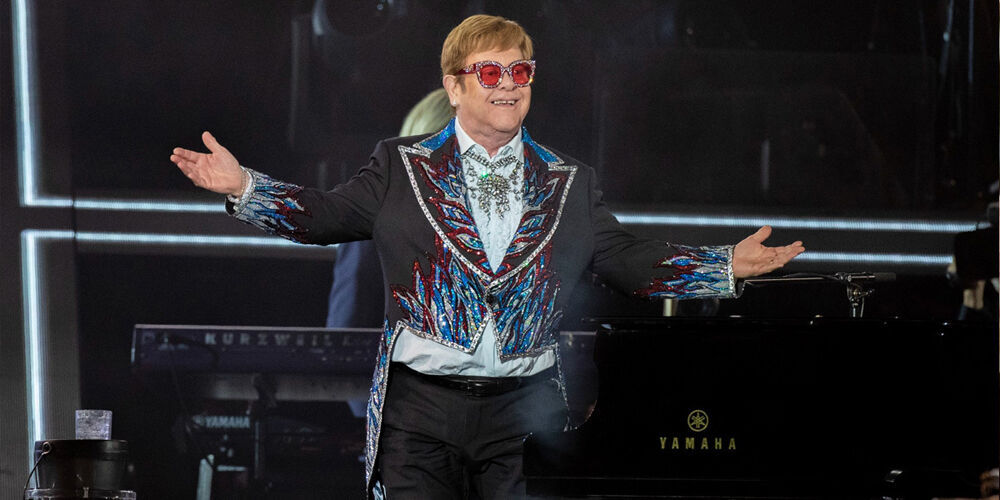
#39: INSIDE OUT 2 - 1 nomination ★★
While not the only sequel in the 2024 class of animated features, this follow-up to the wonderful Disney/Pixar movie from 2015 feels like the most crassly commercial and unnecessary. Still, Pixar has a decent track record of making sequels to their beloved original movies that seem like they're going to be awful, cynical cash-grabs but turn out to be worthy of the characters and narratives that came before (how shocked was I that Toy Story 4 turned out to be so good?) But Inside/Out was such a delicately crafted screenplay that it was kind of a miracle it worked so well. It took a gimmicky high-concept premise that had been done several times before—the idea that the human brain is an industrial system manned by a staff of anthropomorphized emotions—and transformed it into a movie with simple yet profound ideas about childhood development.
Everything in Inside Out grew out of a solid foundational narrative choice that was as brilliantly thought out as the faulty foundational choices in The Substance are underdeveloped. Unfortunately, the only real way to make a sequel to Inside Out that doesn't just feel like a rehash is to spoil that brilliant foundational choice and introduce additional anthropomorphized emotion characters. That's what happens in this nominated animated feature, and the results range from bland to tedious. Inside Out 2 is a prime example of an ill-advised sequel, and those should never be rewarded.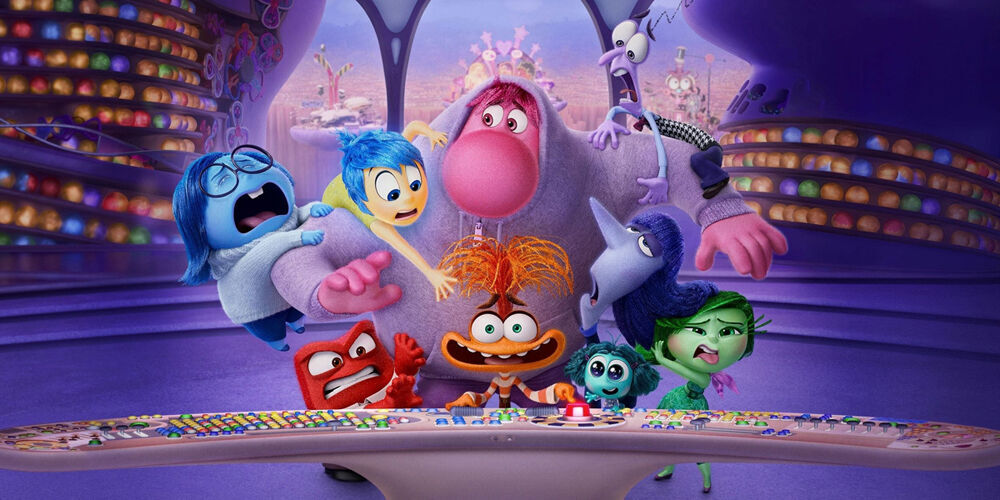
#38: THE ONLY GIRL IN THE ORCHESTRA - 1 nomination ★★+
When it comes to short films, the Academy sure does love movies about musical instruments. As a subject for short-form documentaries and live-action, only the Holocaust tops classical music or teaching music in terms of getting votes. If a film can combine both musical instruments and the Holocaust, like 2014's deserving winner The Lady in Number 6, it's almost a shoo-in.
The least Oscar-worthy of this year's short docs tells the story of veteran double-bassist Orin O'Brien as she prepares to retire from the New York Philharmonic, where she became the first female member of the orchestra. As soon as we meet the spry 87-year-old and see her with her students as she prepares to both move out of her home and pass on her many cherished instruments, we can see how this should be a perfectly good short doc. Indeed, O'Brien's is a quietly remarkable life full of great stories. She was a trailblazer for female musicians, much admired by Leonard Bernstein but often mocked and dismissed by her male peers.
She was also the daughter of Hollywood movie stars Marguerite Churchill (John Wayne's first leading lady, in Raoul Walsh's 1930 70mm epic The Big Trail) and George O'Brien (star of FW Murnau's immortal silent classic Sunrise and a player in John Ford westerns like Fort Apache, She Wore a Yellow Ribbon, and Cheyenne Autumn). But O'Brien never sought the limelight, feeling embarrassed at being singled out in press coverage solely for her gender when all she wanted was to be a member of a section. To this day, she maintains that she applied her craft purely for the love of it, and we believe her.
Unfortunately, director Molly O'Brien, the subject's niece and only living relative, doesn't seem to realize her aunt's personality comes through just fine without hammering home her modesty and reluctance to be in the spotlight. At 35 minutes, this is practically the longest of the nominated documentaries, but it should really have the shortest run time. Plus, any short film featuring an appearance by the director saying something like, "I guess part of the reason I'm making this film is" should automatically disqualify it from getting anywhere near an Academy Award. But that's unlikely in our current era in which the personal documentary is king.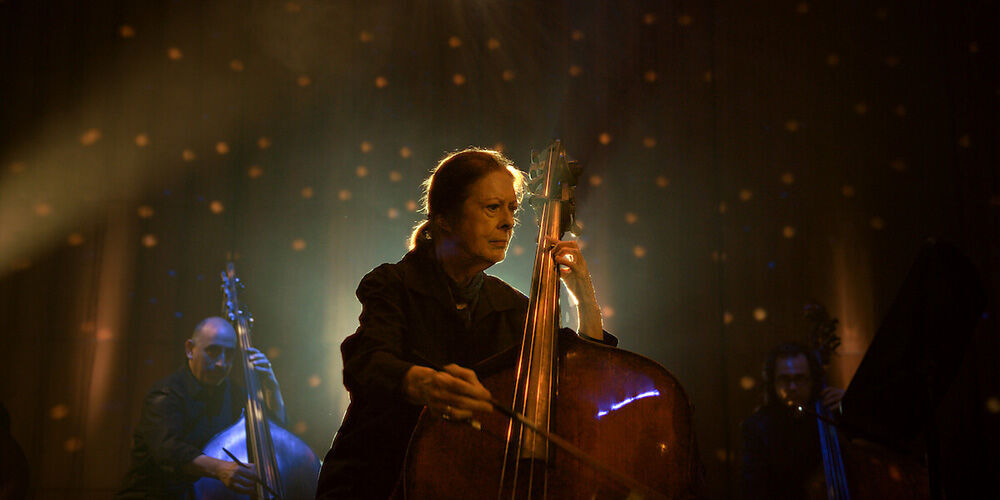
#37: KINGDOM OF THE PLANET OF APES - 1 nomination ★★+
Ahh, the Apes movies! What an interesting series of films these are. The franchise dates back to the 1968 film directed by Franklin J. Schaffner and penned by Michael Wilson and Rod Serling, based on a sci-fi novel by Pierre Boulle. Over the ensuing fifty-five years, there have been four direct sequels of various levels of quality, success, and even genre: a TV series, an animated series, a terrible Tim Burton remake, a number of video games, and the rebooted sequel/prequel series of which this is the fourth installment. This film, which takes place many generations after the events of the prior film, War for the Planet of the Apes (2017), touches on a lot of interesting themes about history and how narrative is used and often perverted to wield power and control a population. Even though there are far more entries that I dislike than I like in this lengthy series, I'll always go to the latest Planet of the Apes picture because there's something grand about this imagined universe, and the films, for the most part, maintain a quiet intelligence that seems to be fan-proof. As to the nominated visual effects, they're not too different from those that have been on display through this rebooted series. This is to say that they are quite good, but there are still primarily a lot of motion-capture monkeys—hardly a new and dazzling effect.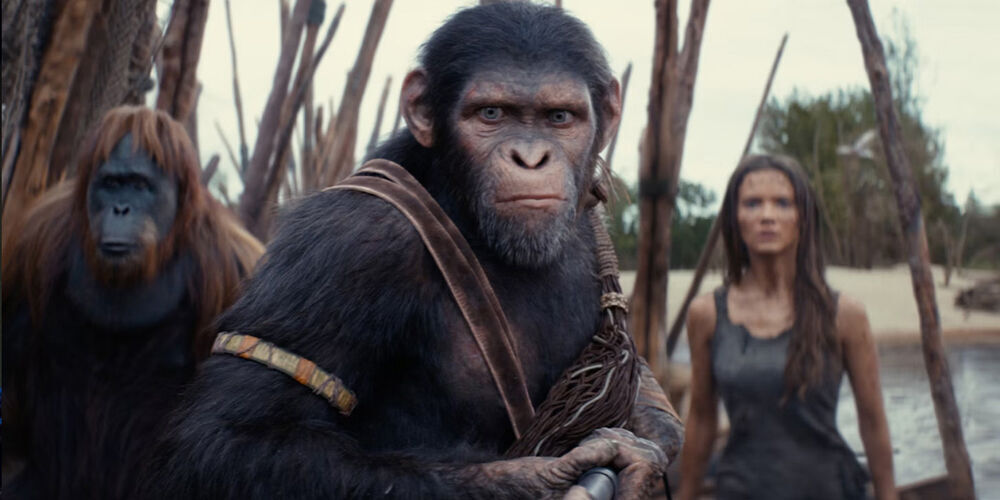
#36: DEATH BY NUMBERS- 1 nomination ★★+
This short film centers on one of the survivors of the Parkland school shooting as she prepares to testify at the sentencing hearing of her former classmate, who murdered many of her friends and wounded her. Twenty-two-year-old Sam Fuentes, who was a young teen when a 14-year-old AR-15-wielding shooter attacked her classroom, is credited as the writer of this documentary based on her journals. The film makes her the lead character in an all too common American story in which the killers are usually remembered by name while the victims become statistics. Parkland was an unusual school shooting in that the teenage mass murderer was not killed on-site or immediately after the incident and instead was captured and tried for his crimes.
The circumstances around this shooting enable director Kim A. Snyder to explore the concepts of justice, closure, and the morality of state execution that many films have tackled from a unique, real-world perspective. Snyder has made school shootings a focus of her work. In 2016, she made the feature doc Newtown and the follow-up short Notes from Dunblane: Lesson from a School Shooting. In 2020, she made a feature doc about the Parkland tragedy, Us Kids, in which Fuentes was one of the subjects. This follow-up short feels like a scripted self-portrait of an empowered survivor who wants to inspire others. There's nothing really wrong with that, except that the film never feels spontaneous or organic. Everything feels deliberately composed and sometimes even contrived— such as a shot of Fuentes watching 12 Angry Men the night before making her victim statement. Death By Numbers builds to its powerful, if pre-destined climax, yet it doesn't deliver the type of catharsis we might expect. Perhaps that's part of the point, but I don't think the film leaves us feeling what it wants us to feel. The movie plays like a solid student film made with significant participation from the teacher.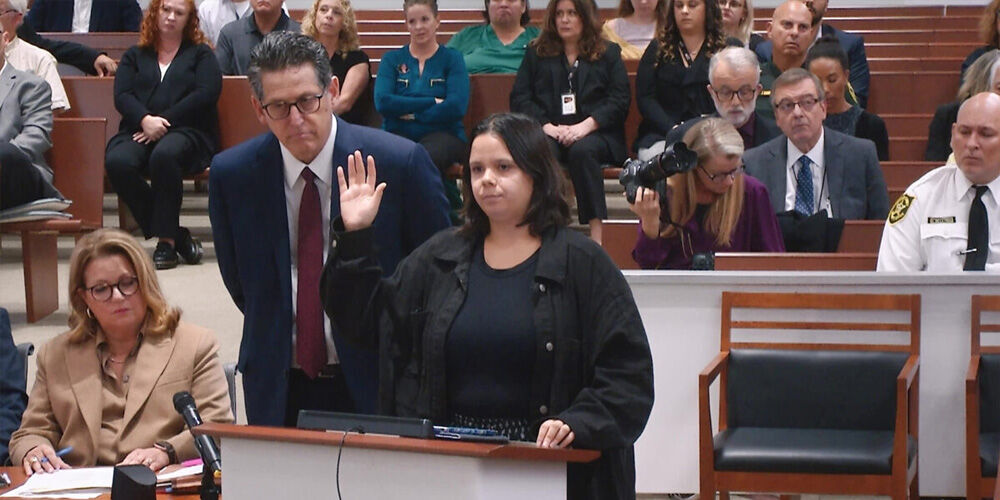
#35: SOUNDTRACK TO A COUP D'ETAT - 1 nomination ★★+
I feel somewhat uneasy ranking lowest the only Oscar-nominated documentary feature of 2024 that isn't a personal film in which the documentarian is also one of the subjects. I much prefer a well-crafted archival film to one where someone with a camera explains their journey to me. However, this year, all the nominated personal documentaries were exceptional films where the merging of filmmaker and subject seems the best way to tell the story. Anyway, the sole film composed of archival material feels like the most personal, director-as-subject piece in the bunch.
Johan Grimonprez's video essay presents itself as a jazz-inspired chronicle of how, in the early 1960s, African-American musicians like Louis Armstrong, Nina Simone, Duke Ellington, and Dizzy Gillespie were used by the State Department as good-will "jazz ambassadors" to Africa and the Middle East as a way to distract from covert C.I.A. operations. However, the film's true focus is the broader narrative of how Western powers, at a critical moment during the Cold War, were threatened by numerous African countries gaining independence, controlling the region that supplied uranium to nuclear nations, and forming a voting bloc in the still newly established United Nations. The story of the U.S./Belgium regime-change plot to oust the democratically elected Congolese Prime Minister Patrice Lumumba and replace him with the more U.S.-aligned Joseph Kasa Vubu isn't really conveyed through the perspective of these iconic Black artists, but rather via their distinctive musical rhythms. To some, this might seem like genius filmmaking; to me, it feels like a filmmaker's style overshadowing the important story he aims to tell, often at the expense of his apparent subjects.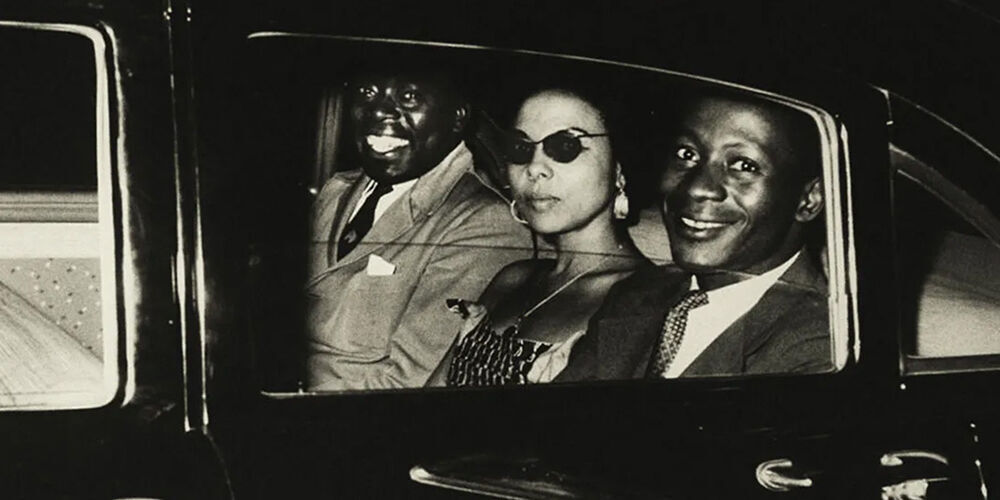
#34: MAGIC CANDIES - 1 nomination ★★+
This Japanese animated short, directed by Daisuke Nishio, written by Baek Hee-na, and produced by Takashi Washio, is slight but sweet. It follows a lonely boy named Dong-Dong who one day buys a bag of what he thinks are marbles but discovers they are actually colorful candies with magical properties. The simple, colorful animation style is winning, but the story grows more predictable and less magical as each candy is consumed.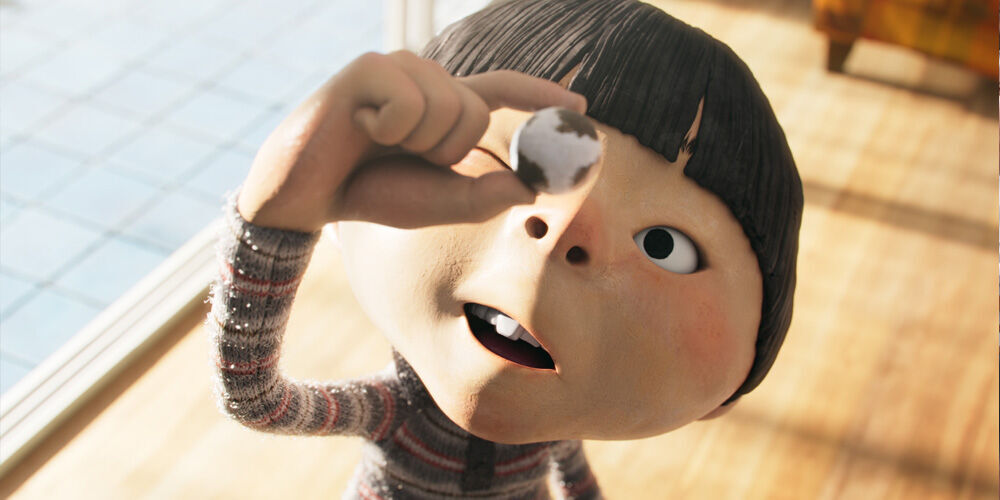
#33: THE LAST RANGER- 1 nomination ★★★
This South African drama is part of an international anthology of shorts called When the World Stopped, produced by Darwin Shaw and Will Hawkes. It's one of 2024's many film that benefits from an end-credits revelation that it is based on a true story, though to a lesser extent than its fellow short film nominees. The story revolves around the attack on a black rhino named Thandi in the Amakhala Game Reserve of South Africa's Eastern Cape. Co-writer David S. Lee witnessed the aftermath of the poaching attack firsthand and photographed the dying rhino that inspired this film. Along with first-time director Cindy Lee and the two producers, he crafts a narrative centered on this incident, featuring a ranger named Khuselwa who introduces a young Xhosa girl named Litha to the game reserve Khuselwa seeks to protect. When poachers arrive to shoot a rhino and chainsaw off its valuable horn, the situation escalates dramatically. There's little subtlety or subtext in this overly straightforward film. Nevertheless, this is a visually handsome production with a compelling cast, and it presents a complete story that addresses significant themes of survival and mortality.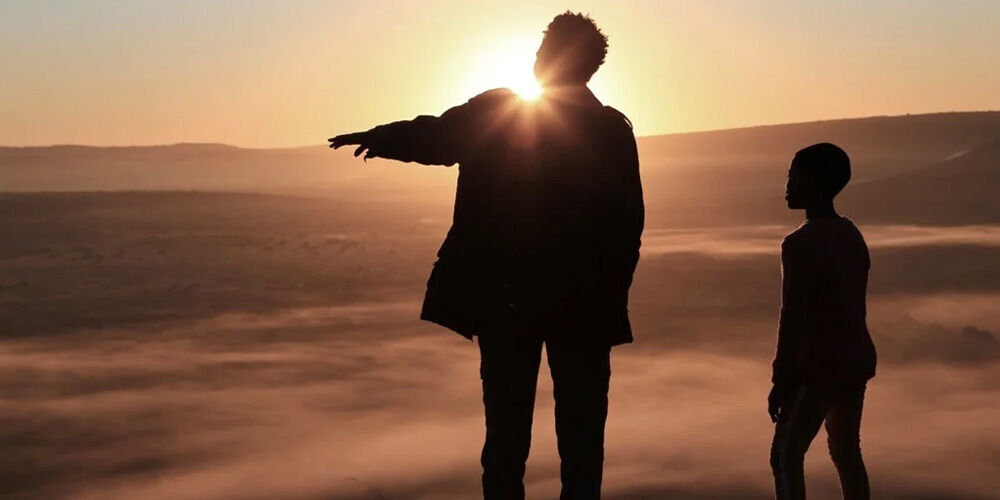
#32: THE WILD ROBOT - 2 nominations ★★★
This mildly charming film, nominated for Best Animated Feature as well as Best Sound and Best Score, deserves these accolades. The blend of music, sound effects, and vocal performances is more captivating than the story, which is perfectly pleasant. I'm not usually drawn to films about robots that try to evoke the same feelings I have for human or animal protagonists. However, this one engaged me with its emotional narrative better than most movies featuring sentient machines. While it carries uplifting family messages, I was surprised to find an animated film where the central theme is at least partly about how difficult and often unfulfilling parenthood can be. That certainly feels appropriate in our era of obsessive parental involvement, prolonged adolescence, and growing issues of parent/child estrangement. It's also a great counterpoint to the recent trend of animated Millennial apology porn that's flooded this category of late, like Turning Red, Encanto, and The Mitchells vs the Machines.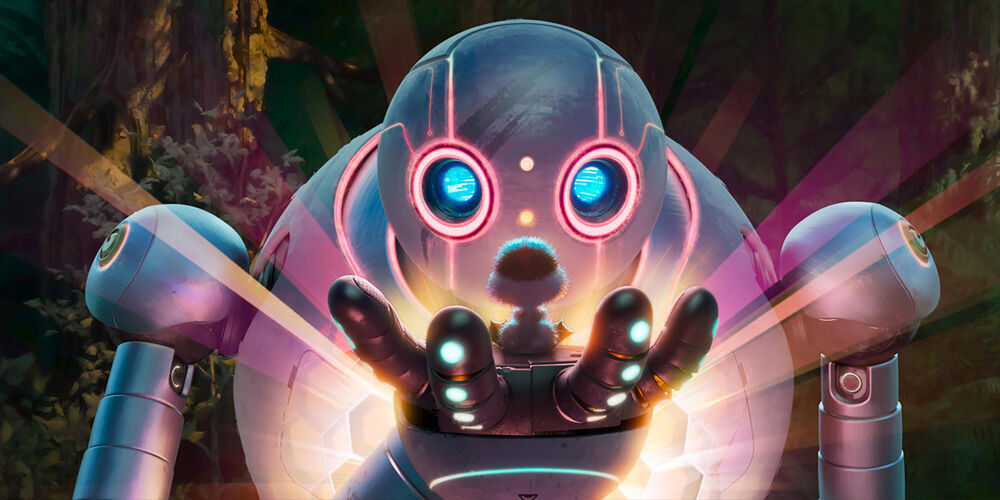
#31: I AM NOT A ROBOT - 1 nomination ★★★
The Live Action Shorts category can be pretty intense and depressing these days, but there is often one light comedy that provides a change of tone when watching all five grouped together in a theater—Wes Anderson's delightful adaptation of Roald Dahl's The Wonderful Story of Henry Sugar in 2023 or Derin Seale and Josh Lawson's laugh-out-loud The Eleven O'Clock in 2018, to name two. The Danish sci-fi comedy I'm Not a Robot, written and directed by Victoria Warmerdam, provides the levity this year. Ellen Parren stars as Lara, a music producer working in an office whose computer requires a system update that presents her with one of those CAPTCHA tests that ask you to prove you're not a robot by checking the boxes corresponding to a visual prompt. After multiple correct answers yield multiple failures, Lara wonders if perhaps she just might be a robot. The film touches on many themes about artificial intelligence and how it's used that we know well by now from countless films ranging from Blade Runner to A.I. to Ex Machina to 2025's Companion, but the comic spin and tone feel ideally suited to the short film format. Unfortunately, this is one of those 2024 shorts that just ends rather than reaching a satisfying conclusion. The movie feels like it cops out just as it's getting thematically interesting. Yet this is not a case where you feel like you're watching a precursor to a larger feature-length version, like Whiplash. I can't imagine a feature film of this premise being as satisfying as this had the potential to be.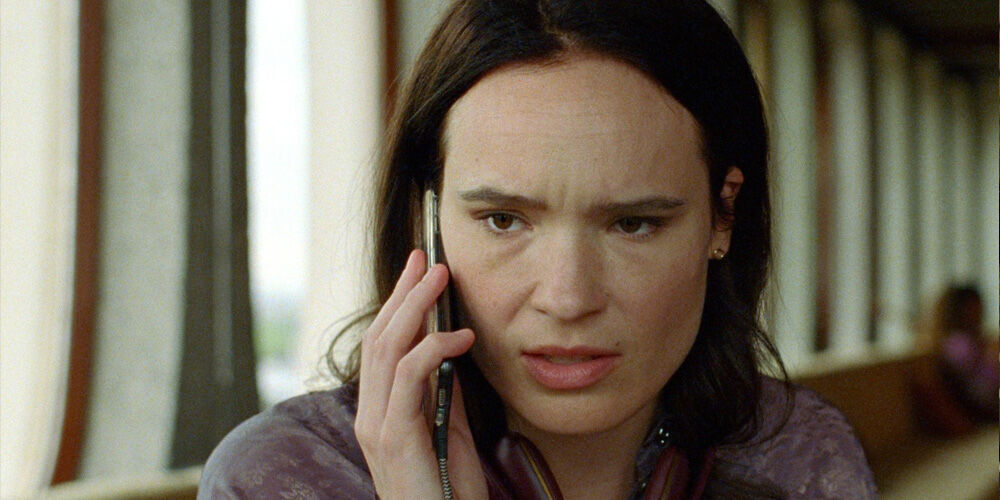
#30: GLADIATOR II - 1 nomination ★★★
My Oscar nominees essay tradition doesn't go back very far, but I do have a ranked list of all the nominated Best Pictures, and I can tell you Ridley Scott's Gladiator from 2000 is near the very bottom. I hate that pretentious piece of shit, with its unforgivably awful Joaquin Phoenix and ugly CGI combat scenes, with a passion. So I was mildly surprised by how much I enjoyed this nearly twenty-five-years-later sequel that no one seemed to ask for. This tongue-in-cheek movie is much more in line with what classic sword-and-sandal pictures can be when they're filled with good actors and not taken too seriously.
There was a lot of buzz around the possibility of Denzel Washington scoring another Best Supporting Actor nomination for his role as a former slave turned arms dealer who keeps a stable of gladiators and plans to eventually gain control over Rome. It would have been a worthy nomination, as Washington attacks the role with just the right amount of swagger, bravado, and winking charm. His Macrinus comes off as if Peter Ustinov's Batiatus from Spartacus was not only the sardonic, scene-stealing comic relief but also a movie-stealing, empire-stealing master manipulator miscreant. But Gladiator II only received a nomination for Best Costume Design. As with CGI monkeys, once you've seen the costumes in one Roman movie, you've kind of seen them all.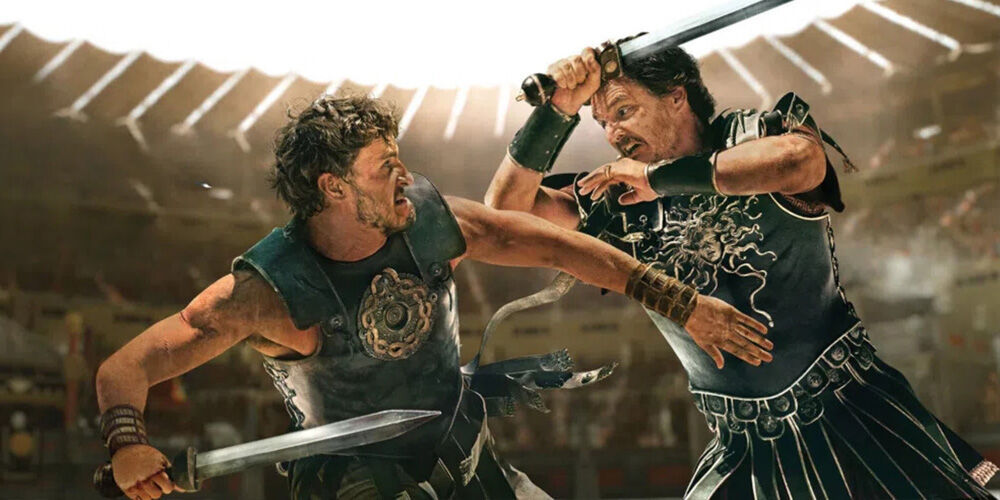
#29: WANDER TO WANDER - 1 nomination ★★★
This imaginative stop-motion dark comedy feels like what we might have gotten if Tim Burton had stayed at Disney long enough to have directed Toy Story. Writer/director Nina Gantz's story centers on a bunch of sentient puppets created for a Mister Rogers/Captain Kangaroo-type children's show. When their human creator dies, they try to carry on some kind of normal existence, but soon, all normality dies as well. The concept is cool and creepy, and the visuals are striking, but the story never blooms much beyond its clever premise.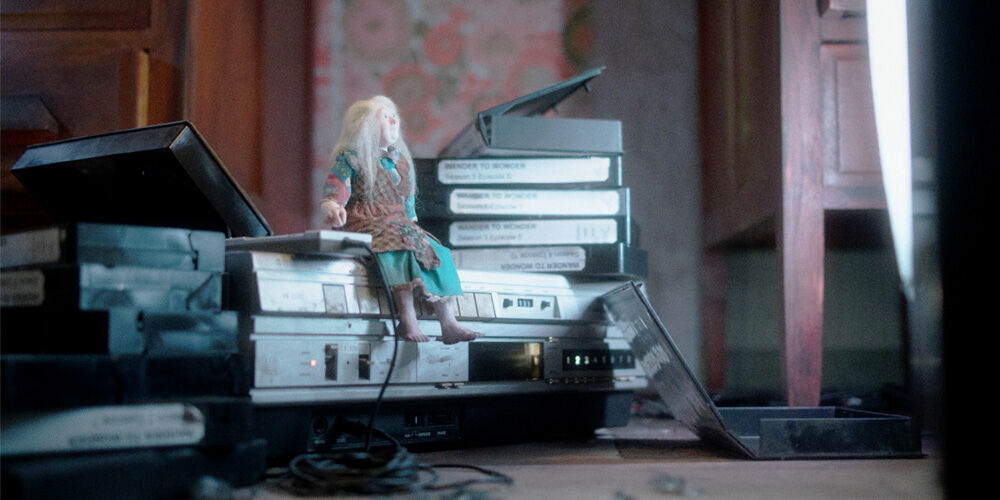
#28: WALLACE & GROMIT: VENGEANCE MOST FOWL - 1 nomination ★★★
The latest Aardman claymation adventure featuring the bumbling British inventor and his loyal dog makes some great choices but ultimately struggles to decide whether it should be a short or a feature film. The highlight of the movie is the return of Feathers McGraw, the villainous penguin disguised as a chicken who was the antagonist in The Wrong Trousers, arguably the best of the Wallace and Gromit shorts. McGraw's lack of a mouth—and therefore, lack of speech—makes him a fantastic counterpart to the uniquely expressive Gromit.
The film shows McGraw escaping from his prison sentence in the zoo by hijacking Wallace's latest invention, an AI-powered garden gnome. The first twenty-five minutes of this film are pure delight. Director Nick Park, co-director Merlin Crossingham, and screenwriter Mark Burton create a number of clever gags and fill every frame with hilarious details. Unfortunately, like many animated movies that are essentially shorts stretched to feature length, the movie drags in the middle. This is surprising since, at 79 minutes, it is the shortest of the ten Aardman features.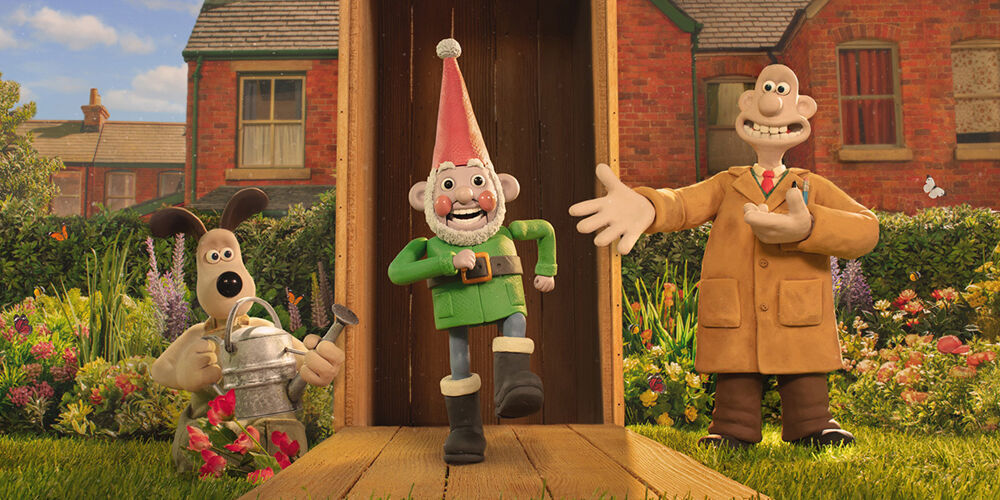
#27: THE GIRL WITH THE NEEDLE - 1 nomination ★★★
An unusual choice for the Academy is Denmark’s submission for Best International Film. The wonderful Danish actress Trine Dyrholm stars opposite newcomer Vic Carmen Sonne in this historical, psychological quasi-horror movie loosely based on the true story of Danish serial killer Dagmar Overbye. Set 100 years ago in Copenhagen, the film explores themes that are all still contemporary concerning poverty and women's lack of control over their lives and bodies. Writer/director Magnus von Horn shoots this historical drama as if it were a gothic horror movie, with some sets and camera angles looking like they could be from Nosferatu, though lit with an entirely different visual aesthetic. While I admired the craft of the picture, I felt the style overwhelmed the story. Fortunately, the excellent cast grounded the picture in the dark reality.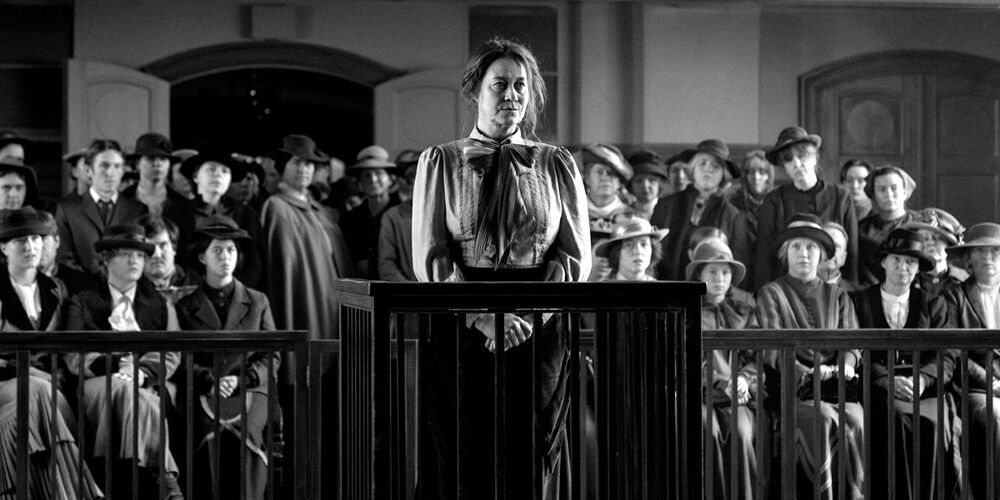
#26: IN THE SHADOW OF CYPRESS - 1 nomination ★★★
This Iranian animated short by Hossein Molayemi and Shirin Sohani feels like an antidote to the nominated animated feature Memoir of a Snail. While also a tale of trauma, this film conveys its story wordlessly and its themes by way of metaphor rather than the wall-to-wall narration explaining everything you're supposed to feel. I much prefer this kind of film, animated or otherwise, even though I wasn't fully able to grasp everything happening in this story, which is about a widowed former sea captain with PTSD trying to repair his ship and his complicated relationship with his daughter. But as long as a film holds your interest, it's fine if you can't follow every point it's making. That might even inspire you to go back and watch it a second time, which is hardly an imposition when the film is only 20 minutes long and the animation style is as uniquely abstract as this is.
#25: INSTRUMENTS OF A BEATING HEART - 1 nomination ★★★
This short doc about soon-to-be second-graders in a Tokyo public elementary school music class is as fraught as it is adorable. We meet these COVID-masked kids as they audition to play various instruments at an assembly where the new incoming first-graders will be serenaded with Beethoven's "Ode to Joy." The film at first seems open to focusing on any of the children in its opening minutes, but it quickly settles on its protagonist, Ayame, as she struggles to land a prime instrument and keep up with her classmates, who practice more than she does. The film is most interesting because I imagine it will divide audiences based on what generation they were born into. Older viewers may see it as an illustration of why Japanese children always beat the US in nearly every measurable academic standard, while younger audiences may have a viscerally negative Whiplash-esque reaction to the trauma little Ayame faces as a result of being shamed at rehearsal in front of her peers. I'm not sure if this is an Oscar-worthy movie, but director Ema Ryan Yamazaki (editor of the Oscar-nominated documentary feature Black Box Diaries) finds a nice structure, a sympathetic character, and, at 23 minutes, a perfect running time for this story.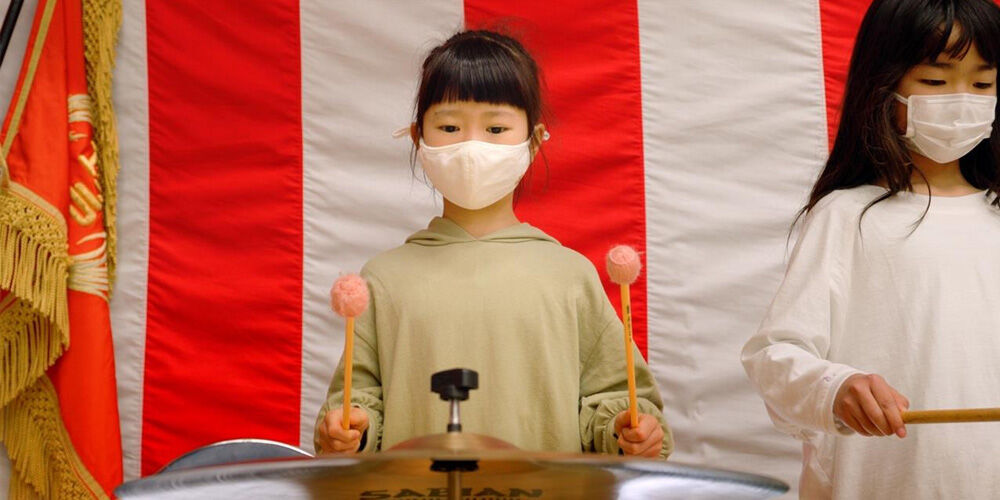
#24: BEAUTIFUL MEN - 1 nomination ★★★
The nominated animated shorts program is never limited to strictly kiddie or family fare, but this entry feels expressly aimed at the middle-aged crowd. Three balding Belgian brothers travel to Istanbul to get bargain hair transplants, but the one in charge of logistics accidentally only booked one appointment. So we end up stuck with these lonely, insecure guys, just as they are stuck with each other in a hotel in a foreign country. I don't know that I've ever before dreamed of an animated short getting remade into a live-action feature, but I came away from this one fantasizing about an Alexander Payne version with Paul Giamatti as the least liked of these three beautiful men.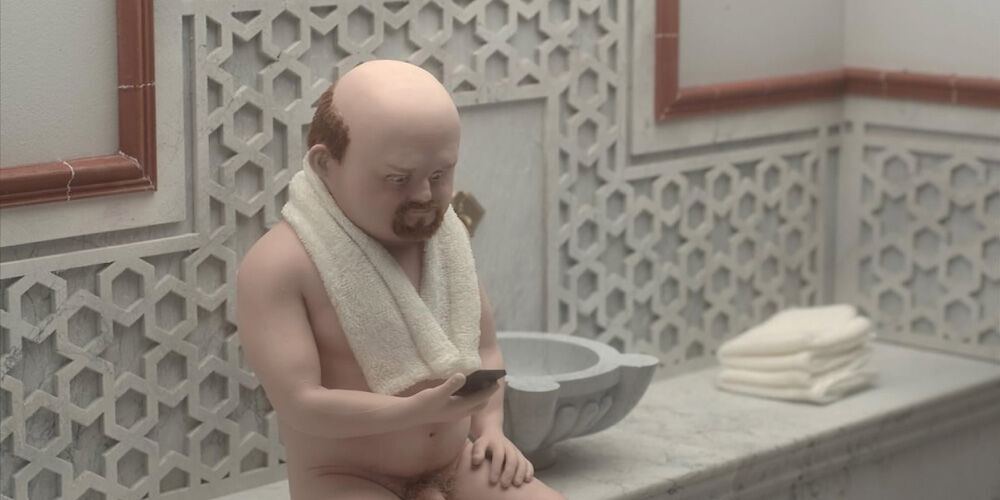
#23: YUCK! - 1 nomination ★★★
Even more fun than Beautiful Men's ode to middle age is this ode to the tween years from French writer/director Loïc Espuche. Set in a family campground during the summer, the short movie captures the moment when kids transition from finding kissing gross to suddenly wanting to experience a kiss for themselves, yet they'd still be mortified should their peers discover that they might be secretly harboring such a desire. Yuck! illustrates how a simply rendered animated short with a straightforward concept can often be far more satisfying than something more elaborate or complexly created.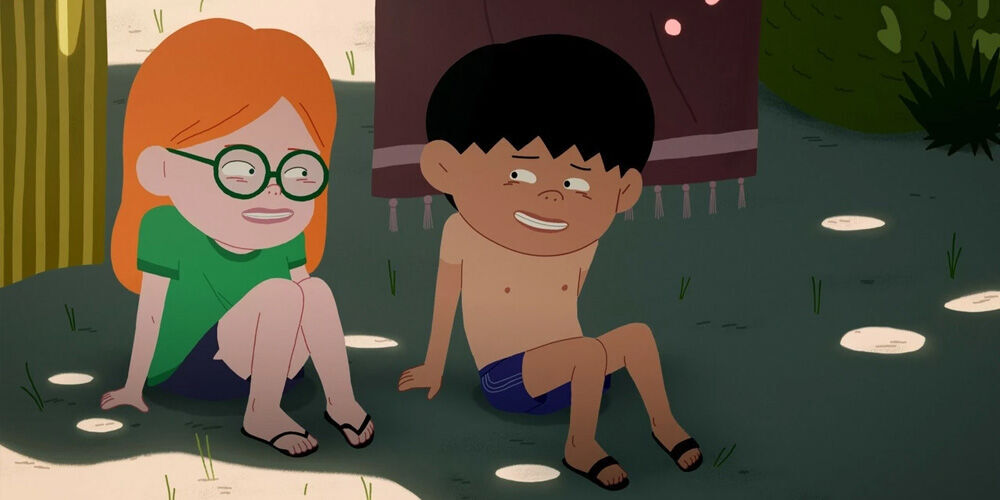
#22: FLOW - 2 nominations ★★★
A double nominee for Best Animated Feature and Best International Feature, Flow is the strongest of the year's animated features and the most interesting animated film I saw in 2024 (though I didn't see many). Latvian filmmaker Gints Zilbalodis and his team used open-sourced programs to craft this wordless story of a cat and a bunch of other animals trying to survive an apocalyptic flood. These characters are far more multidimensional than those found in the first dozen or so films in this list. Of course, like so many of this year's most acclaimed pictures, I still have to use the word overrated to describe this movie, which made it onto dozens of critics' best-of-the-year lists and was instantly invited to join the Criterion Collection. While it's mysterious and compelling, and while I did find it much more captivating upon my second viewing, I can't say I think this is some kind of masterpiece. But it is a nice change of pace to see a deserving independently produced movie not only get nominated for this award but, in all likelihood, take home the trophy.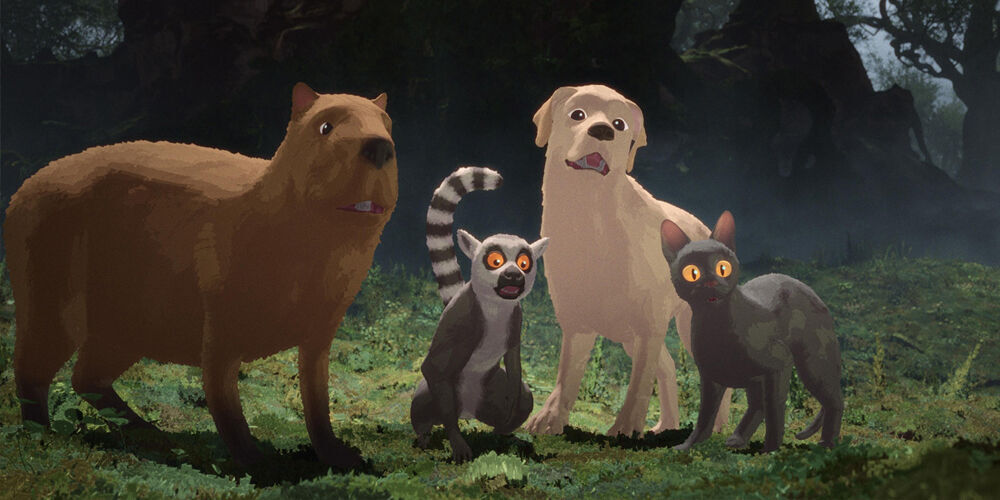
#21: SING SING - 2 nominations ★★★
I've been following the careers of filmmakers Greg Kwedar and Clint Bentley since I met them at South By Southwest, where they were debuting their first movie, Transpecos. However, none of their previous work prepared me for a film like Sing Sing, their third release. This docufiction is based on the Rehabilitation Through the Arts program at the infamous maximum-security prison. It tells the story of how several inmates involved in the program staged an original play titled Breakin' the Mummy's Code. The film features many of the actual men on whom the story is based, following their journey as they mount a time-traveling musical comedy that blends many elements and features both Hamlet and Freddy Krueger as characters, right down to the details of their unusual production.
Colman Domingo, who has recently been saddled with several leading and supporting roles in too many mediocre Oscar-bait films, finally earns a nomination for a role worthy of his talents. He stars as John "Divine G" Whitfield, a middle-aged man wrongfully incarcerated, who is a foundational member of the vibrant theater program where prisoners discover community and purpose. While it's unlikely Domingo will win the Oscar this time out, he delivers a scene that may be the most brilliantly acted moment in any film this year. His principal co-star, the formerly incarcerated Clarence "Divine Eye" Maclin, plays himself during the time he served at Sing Sing. Many speculated that Maclin might receive a supporting actor nomination for portraying his former self, an emotionally guarded prisoner who joins the acting troupe. Though the acting nomination didn't materialize, he is nominated, alongside Kwedar, Bentley, and Maclin, for the screenplay they adapted from John H. Richardson's non-fiction book, The Sing Sing Follies. The film also garnered an Original Song nomination for the somewhat uninspired “Like a Bird" by Texas-based musicians Abraham Alexander and Adrian Quesada.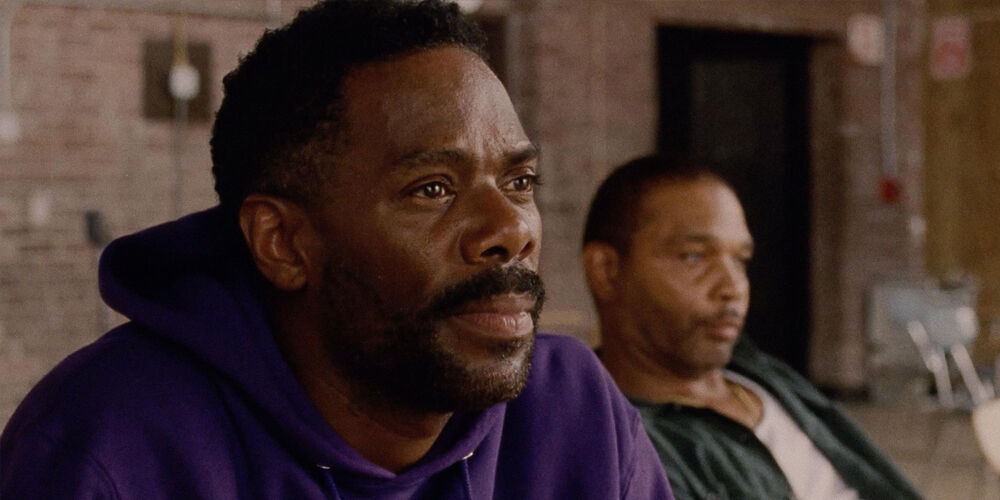
#20: SEPTEMBER 5 - 1 nomination ★★★
One of the few major award nominations this year to not seem to default to one of the ten Best Picture nominees is Moritz Binder, Tim Fehlbaum, and Alex David's Best Original Screenplay nom. The film, directed by Fehlbaum, is a gripping docudrama that explores how the 1972 Munich Olympics hostage situation was covered by the ABC Sports Team, becoming the first live worldwide TV broadcast of a large-scale news event as it unfolded. The film is well directed and features some terrific performances, but the screenplay is actually where it comes up a little short. The script wrestles with some age-old questions about how journalists, especially those working in TV, often value the scoop over the people at the center of their story, and whether or not being the first to get a scoop out to the world is really the best thing for the world. However, these vital moral issues are still kept at a fairly surface level in the movie.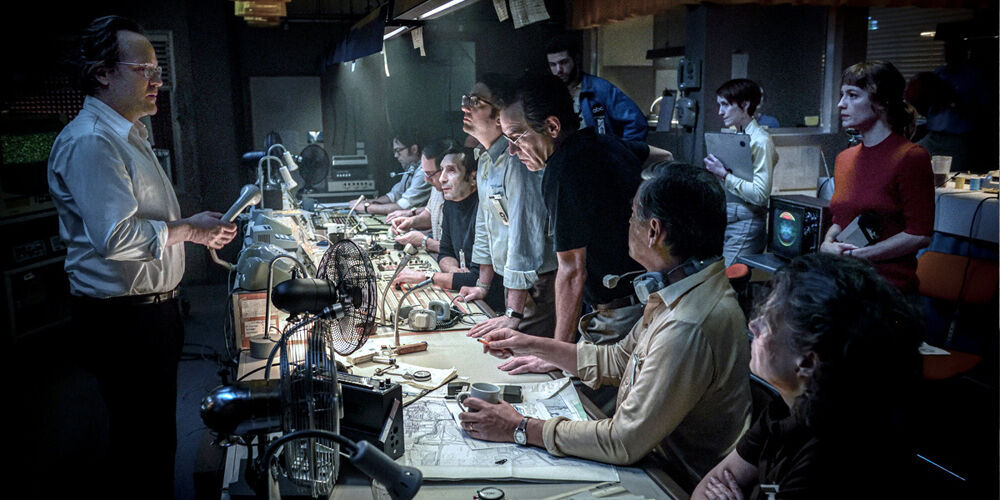
#19: NICKEL BOYS - 2 nominations ★★★
RaMell Ross is two for two, scoring major nominations in the respective categories for both his first film, the 2018 Best Documentary Feature nominee Hale County This Morning, This Evening, and now for the Best Picture-nominated narrative feature Nickel Boys. He and co-screenwriter Joslyn Barnes are also nominated for adapting Colson Whitehead's Pulitzer Prize-winning historical novel. Many believed this film would also receive a cinematography nomination due to its unique visual approach in telling the story through the eyes of the lead characters. However, I'm not too surprised that the cinematography branch didn't nominate Director of Photography Jomo Fray because what's visually special about this movie clearly arises from the way it's written and directed, far more than from the way it's lit and composed.
The film's unique multi-character first-person point of view technique visually mirrors how Whitehead's prose explores a friendship between two young African American teenagers in Jim Crow-era Florida, navigating life in a segregated reform school where the Black inmates are used as laborers. Ross, who is a photographer himself, employs a similarly lyrical and impressionistic approach to the one he took in Hale County, which shares some similarities to Fray's work in Raven Jackson's acclaimed 2023 film All Dirt Roads Taste of Salt. But for me, the subtle observational qualities of Hale County stand in stark contrast to the frustratingly unspecific approach of Dirt Roads, which consists primarily of maddeningly tight frames filmed handheld with long lenses.
Nickel Boys nearly makes sublime a gimmicky concept that filmmakers have pursued for nearly a century. From Robert Montgomery’s 1947 film noir Lady in the Lake, told entry from the POV of Raymond Chandler's private detective Philip Marlowe, to Steven Soderbergh's 2025 experimental ghost story Presence, told from the viewpoint of a silent, non-corporeal presence, the idea of using a movie camera to convey a first-person perspective has been a long-held dream. However, the way the human eye perceives the world looks nothing like what a camera can record. How a person navigates through an environment bears little resemblance to how a film camera tracks movements between rooms and shifts attention between people and objects in space.
Nickel Boys doesn't lock itself into the rigid confines of a main character we never get to see, outside of brief glimpses in mirrors or other reflective surfaces. The fact that the film's point of view is shared by its two lead characters, as well as a third perspective that gets introduced later in the movie, enables Ross and Fray to use more of the range of cinematic language—close-ups, wide-shots, tracking shots, etc.—rather than being limited to just one, the POV. It is quite an accomplishment. That said, I don't know if this approach is really the best way to tell this story because, like pretty much everyone else I've read or talked to about this film, I came out of the movie, both times I saw it, thinking more about the filmmaker and his ideas than the characters and their story.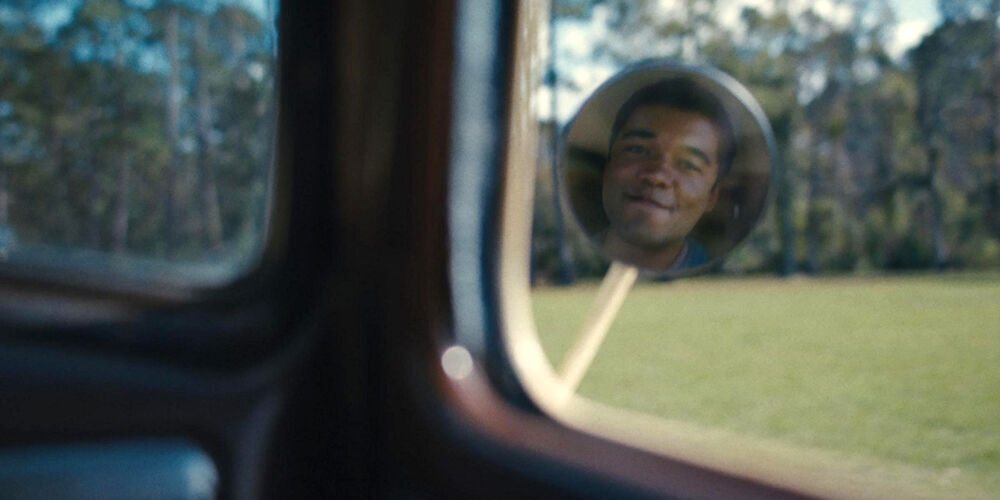
#18: A REAL PAIN - 2 nominations ★★★
After his underwhelming debut as a writer/director with the black comedy When You Finish Saving the World, actor Jesse Eisenberg scored major acclaim with this sophomore effort, a buddy road comedy-drama about navigating personal and generational trauma. Known for playing smart, nervous, verbose characters in films like The Squid and the Whale, Adventureland, and The Social Network, Eisenberg crafts a role for himself that’s both right in his wheelhouse and also perhaps the most relatable character he's ever played. His David is an uptight bundle of nerves and resentments who is trying to reconnect with his cousin by taking an ancestry tour through Poland with him in honor of their beloved Holocaust survivor grandmother.
While there are almost twenty films I saw this year that I'd nominate for Best Original Screenplay over this one, I know how much the Academy loves to reward actors who try their hand at writing and directing, so I can't begrudge Eisenberg's inclusion in this category. A Real Pain is a better original screenplay than its fellow nominee September 5 and vastly superior to the abominable nominated screenplay of The Substance.
But the award this movie is much more likely to win is for Best Supporting Actor. Kieran Culkin has been racking up awards recently, mostly for his work on television as one of the ensemble members of the hit HBO series Succession, for which his acclaim came fairly late in the run of that show. I've always liked Culkin's work in film, TV, and stage, but he's the kind of actor who does one certain type of part very well, and it's a type I get a little tired of. I don't mean by this to say that Culkin always plays the same character; there's a lot of variety in the roles he takes on, but, as with Eisenberg, I always see him first and the character he's playing second. As it happens, Eisenberg has written a role that suits Culkin extremely well, a seemingly easy-going, openhearted charmer whose filterless, freewheeling exterior is a thin veneer covering deep insecurities, hostilities, pain, trauma, and hopelessness. It's a showy role that Culkin seems to embody effortlessly.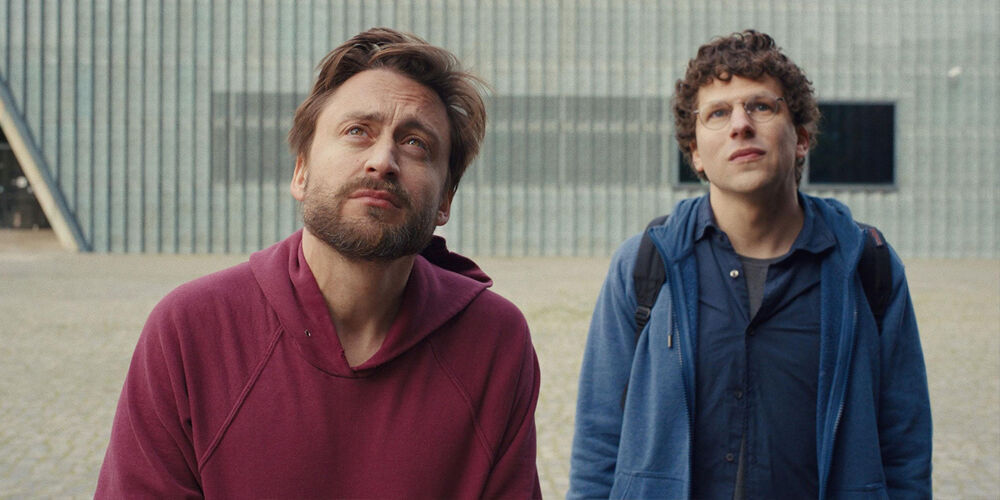
#17: DUNE: PART II - 5 nominations ★★★
I've pretty much sworn off movies with Part One in their title, even when they don't officially have Part One in their title as marketed, which neither Dune nor Wicked did. I dislike anything that makes cinema feel like television, and few things feel more like contemporary TV than a long, unwieldy, repetitive narrative that ends on a cliffhanger. With a film, you usually have to wait a year rather than a few months for the story to resume. And when this approach is applied to a movie based on a book or play or musical, it feels like a lazy way to not have to do the actual work of adapting source material into a new medium and a way to potentially make twice as much money for that lack of effort as a studio would had they produced one excellent film.
The argument I always get is that some books, plays, etc., are just too long to fit into a feature-length film, even a long one with an intermission like Lawrence of Arabia. The folly of this argument is that it elevates something like J.K. Rowling’s Harry Potter and the Deathly Hallows, Suzanne Collins's The Hunger Games: Mockingjay, or even Frank Herbert’s Dune above T. E. Lawrence's Seven Pillars of Wisdom. The idea that a book is so precious that every detail of it must be preserved intact betrays the whole idea of cinematic storytelling, which is distinctly different from literature, poetry, or even airport paperback novel writing.
I make the Lawrence of Arabia comparison because I think Denis Villeneuve, co-writers Jon Spaihts and Eric Roth, and the team of producers that made this two-part adaptation of Dune could have made a terrific stand-alone epic out of this material. Brady Corbet's 2024 indie movie The Brutalist proved that a nearly four-hour old-school feature with an intermission can still play in cinemas, even multiplexes. So it's wild to think what a filmmaker like Villeneuve and a studio like Warner Brothers could do with even half the roughly $400M budget allotted to these two movies had they chosen to make one epic picture. (They never would have made a much money doing it that way, so maybe it's a moot question.)
Watching Dune: Part Two confirmed my belief that a single film which condensed much of the intricacies of Herbert’s imagined history into the compelling and mysterious first hour of an epic film, might have yielded an all-timer of a movie, rather than two incomplete films, in which the first is all exposition with no payoff. Dune Two's nominated cinematography, production design, sound, and visual effects are no different from those found in Dune: Part One, except for the tiny detail that they serve a story rather than just act as ornamentation and “world-building” for a later story. In today's film industry, in which the majority of big-budget Hollywood releases look like interchangeable CGI muck and sound like an even more generic mush of continuous loud noise, a sci-fi movie with the level of craft on display in these Dune pictures is a thing to celebrate. But I can’t support a Best Picture nomination for something that is not a complete story.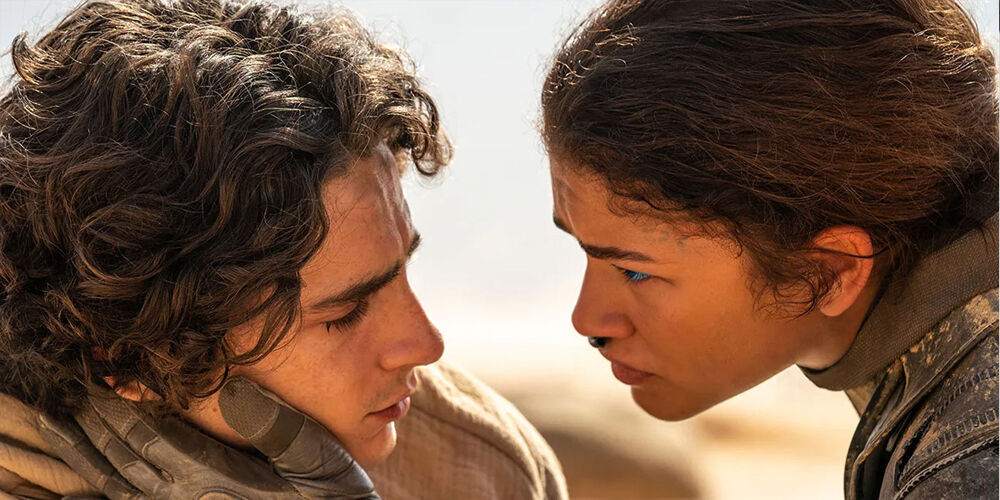
#16: PORCELAIN WAR - 1 nomination ★★★+
As I noted, most of this year's nominated documentary features are made by the people they're about. Porcelain War opens with a title card informing us that almost everything we will see in the movie was shot by the film's subjects. Those folks are Slava Leontyev, Anya Stasenko, and Andrey Stefanov. (Leontyev is one of the credited directors, and Stefanov has the sole cinematography credit.) Each of these everyday patriotic Ukrainians is an artist who has chosen to remain in their homes on the outskirts of a city that's been bombed out by the Russian forces that continue to advance deeper into the country. Like most of the nieghbors who live in this area, these amateur filmmakers have also become volunteer soldiers who spend much of their time fighting the Russians. Slava also trains other civilians on how to use machine guns and other weapons of war.
The sequences of these units patrolling the area, rescuing people in collapsed buildings, and using drones to drop small bombs on Russian tanks is quite remarkable, especially the drone's-eye-view footage combined with footage I assume is from a second drone filming what the armed one is doing. Equally astounding is the juxtaposition of scenes of combat and death with scenes of home life and making exquisite art in what appears to be a beautiful, serene area. Watching Slava firing semi-automatic weapons while he reconciles the need to embrace instruments of murder in what he views as a righteous struggle with scenes of him and Anya creating exquisitely detailed porcelain figurines in the couple's home studio is a real mind-bender. Few wartime documentaries about adults capture the normalcy and day-to-day existence of life under occupation during a hot war.
The film's title comes from a quote by Slava, that "Ukraine is like porcelain, easy to break but impossible to destroy," and the film emphasizes the power and the purpose of art and patriotism. There is some incredibly effective animation created by the Polish company BluBlu Studios that gets laid over the hand-painted designs of the figurines that practically put the viewer into a trance as we hear audio of the film's lead characters talking about the need for national pride, resilience, and beauty. The movie may be a little all over the place in terms of its tone and structure, but it's damn effective.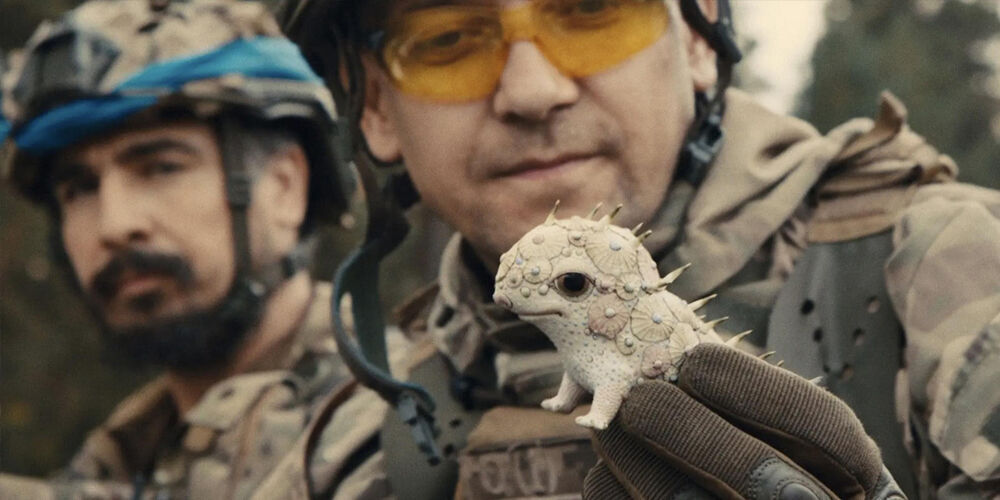
#15: MARIA - 1 nomination ★★★+
The third in Pablo Larraín’s trilogy of biopics that take place over a week centers again on a legendary public woman of the last half century. Larraín paints a portrait of arguably the world's greatest opera singer, the legendary soprano Maria Callas. Early buzz on this picture was high, especially for its star Angelina Jolie, but the film was roundly rejected once it hit theaters, and the Oscar talk died down to a murmur. In the end, only its legendary cinematographer Edward Lachman scored a nomination.
Lachman and Larraín's previous collaboration, the lamentable El Conde, also nabbed a lone cinematography nomination, as Lachman is an artist whose peers are eager to reward. If he'd shot any of the ten films nominated for Best Picture, I'd say he'd be a shoo-in, but there's very little love for Maria. That's too bad because I think this is the best of Larraín's triptych of iconic twentieth-century women, and it unquestionably features the best of the three performances. Jolie has always been an actress out of time, seeming to belong much more to an earlier, more glamorous era of cinema than the one she was born into. There just haven't been a lot of roles that fit her larger-than-life screen persona.
Until this film, playing Maleficent, the "Mistress of All Evil," in the 2014 live-action alternative telling of Disney’s Sleeping Beauty seemed the kind of oversized role most suited to her. But the peerless Greek-American soprano that Leonard Bernstein called "the Bible of opera," who was as famous for being temperamental as she was for her golden voice, is a movie star role for a movie star like Jolie. In preparation for the film, Jolie trained for seven months to sing opera seriously so that her singing would look authentic. Her own voice was digitally mixed with recordings of Callas at varying degrees depending on how well the character sings at different stages of her life. It’s a very unusual and unique feat of acting that I think qualifies as the best lead performance of the year, male or female. The only other person who could stake that claim is the also unnominated Marianne Jean-Baptiste for her role in Mike Leigh's Hard Truths.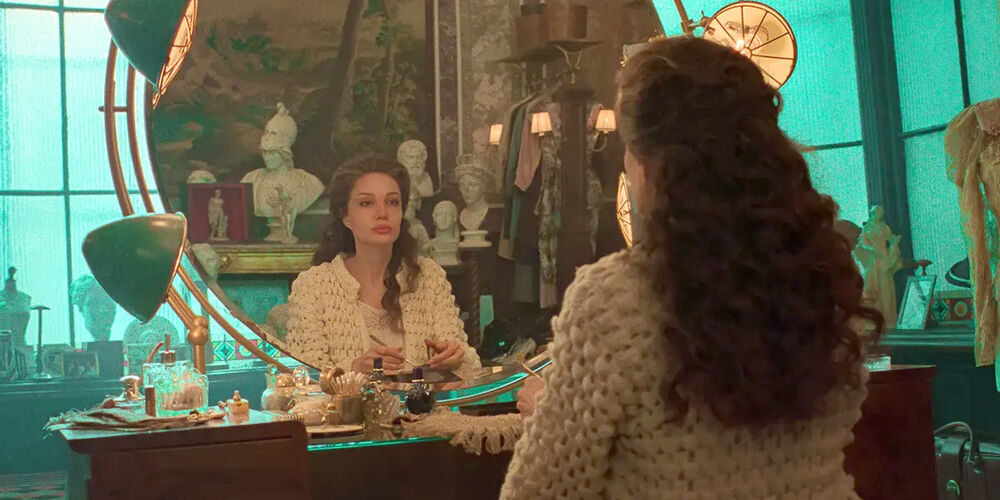
#14: THE APPRENTICE - 2 nominations ★★★+
Despite my general dislike of biopics, several films in my Top 20 of the year technically fall under that heading. One of the main qualities that makes Maria, The Apprentice, and A Complete Unknown stand out from most biopics is that they are not truncated, cradle-to-grave narratives that cram all the highlights of a famous person's life into a feature film's running time. Instead, these movies focus on specific periods at the beginning or end of their subjects' lives, creating a portrait of the individual rather than attempting a complete biography.
Among the three films, the exploration of Donald Trump's formative years spans almost two decades, covering the longest time. However, as we all know too well, Trump’s life consists of many chapters, and the story of how he was mentored by the legendary cutthroat New York attorney Roy Cohn unfolds like a supervillain's origin story. Yet this is not a shallow, cheap takedown of the man who was legitimately elected president for the second time in the same year this movie was released. It offers a straightforward, clear-eyed examination of why Trump's life has been able to have so many chapters, despite the dishonest and disreputable way he has always conducted himself and his business. The film, by way of scenes of Roy Cohn's advice and behaviour, lays this out in a way that should, once and for all, silence all professional political commentators on the "left" side of the corporate news outlets, who have been writing puzzled editorials and delivering frantic commentaries about how baffled they are by this man's seemingly Teflon qualities throughout my entire adult life. Of course, a small film like this would never disrupt the way the billionaire class crafts and curates its propaganda to the masses who elect leaders on both sides of the democracy they control.
Both Sebastian Stan and Jeremy Strong received well-deserved nominations for Best Actor and Best Supporting Actor, respectively, by avoiding turning either man they portray into a caricature. Stan, in particular, excels at distinguishing himself from the myriad Trump impressionists out there, focusing on Trump's mouth and capturing the slightly strained look behind his eyes whenever he listens to someone else speak. While Strong nearly makes us forget all the legendary actors who have previously played Roy Cohn to great effect and acclaim on the big screen, small screen, and on stage—Joe Pantoliano, Ron Leibman, Nathan Lane, Al Pacino, and James Woods. 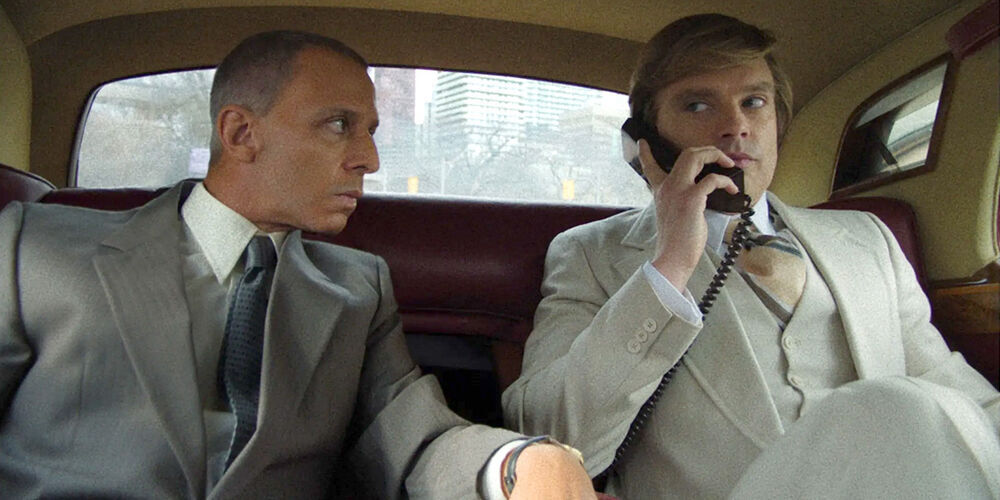
#13: SUGARCANE - 1 nomination ★★★+
Like most of this year's nominated documentary features, Julian Brave NoiseCat's film is both a personal story and a journalistic investigation. Together with his co-director, Emily Kassie, who is also a co-producer and one of the cinematographers, the director/co-subject follows a group of indigenous people who, like him, are descendants of captive young mothers who were impregnated by abusive priests and teachers at a Canadian Catholic missionary school. The movie offers a timely personal exploration of generational trauma resulting from colonialism and systemic racism. Its most powerful sequences are not those where the camera intrudes on intimate conversations between family members, but rather the wordless moments when one or more of these subjects, whose culture has been intentionally decimated, spends time in spaces of European cultures that have been deliberately preserved and protected for centuries.
#12: I AM READY, WARDEN - 1 nomination ★★★+
Smriti Mundhra's short documentary about a death-row inmate in the last days leading up to his execution takes an effective and unsanctimonious look at the moral issues surrounding the death penalty, justice for victims, spiritual rebirth, forgiveness, revenge, and redemption. Though centered on Texas death row prisoner John Henry Ramirez and his desire to change his conviction to life in prison without parole, Mundhra spends as much time with the victim's son, Aaron Castro; Ramirez's own son, Israel; and Jan Trujillo, a devout Bible teacher who was an avid supporter of the death penalty until she got to know Ramirez during his incarceration and was convinced he'd turned his life around through Christ. Anti-Death Penalty District Attorney Mark Gonzalez, who tried to get a reprieve for Ramirez, is also interviewed.
Mundhra's seemingly neutral stance on the political issue at the center of her film and her access to all the various people involved in the story make this picture distinct from many other documentaries about convicted murderers. The film doesn't come down hard on whether or not the execution should be carried out because most of the characters seem to be of two minds about it, even Ramirez. There are some incredibly intimate scenes that should feel uncomfortably intrusive, as a couple of moments in the feature doc nominee Sugarcane do, yet they never come off that way here because we can sense a well-established trust between the unseen filmmaker and her subjects. I've worked on many documentaries, and this one has the innate feeling of a director/producer doing the necessary work to win the trust of her subjects. The humanity of each person we meet registers powerfully on camera. Much as critics love to heap praise on the flashy, heavy hand of a director like Soundtrack to a Coup d'Etat's Johan Grimonprez, what we don't witness but can intuit of Smriti Mundhra's work here is what true documentary directing is all about.
#11: CONCLAVE - 8 nominations ★★★+
Though released early in the year, this stately yet soapy melodrama set inside the Vatican during a gathering of high church officials to elect the next pope could be 2024's Best Picture winner. While it's hardly anyone's favorite film of 2024, I have yet to meet someone who doesn't like it. With the ranked choice voting system, if enough Academy members have this as their third, fourth, or even fifth choice, it could take the top prize. While that outcome is unlikely, especially since director Edward Berger was not nominated, part of the fun of 2024's Oscar race is its unpredictability.
In addition to Best Picture, Conclave is nominated for Editing, Costumes, Score, Production Design, Peter Straughan's screenplay adaptation of Robert Harris’s novel, and two acting nods—Ralph Fiennes's leading role as Cardinal Thomas Lawrence and Isabella Rossellini's supporting turn as Sister Agnes. Rossellini’s role was so small that many were skeptical she'd receive the nomination. However, an actor's impact matters far more than their screen time in supporting performances. She may only appear in the film for less than eight minutes, but that duration doesn’t even crack the top ten shortest screen times of Supporting Actress wins.
While Conclave just misses a slot in my top ten nominated films of 2024, I believe all its nominations are well deserved. Especially in a year filled with movies that feel and look as artificial as a bunch of disparate elements slapped together in a computer, it is refreshing to watch an elegant production where every department seems to work from the same design towards the same artistic vision, with each member of the stellar cast all knowing precisely what kind of film they're in and how to put the material across most effectively. Berger's film is a delightfully bitchy potboiler dressed in prestige-picture accouterments.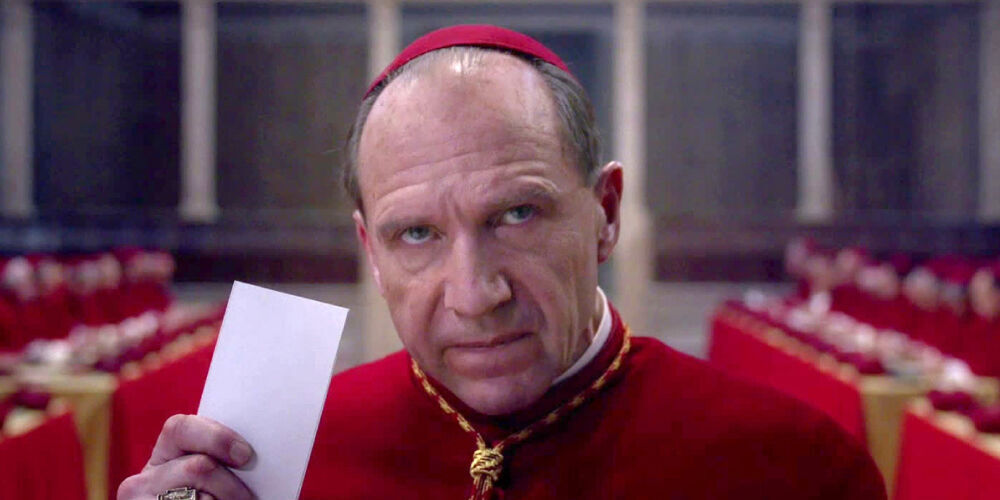
#10: BLACKBOX DIARIES - 1 nomination ★★★+
Director Shiori Itô places herself more squarely at the center of this nominated documentary feature than even Julian Brave NoiseCat in Sugarcane or the filmmakers behind Porcelain War. Blackbox Diaries chronicles Itô's experiences of being sexually assaulted by a respected colleague and the act of going public with her accusations against this well-connected individual. It's an infuriating yet inspirational blend of personal journal and investigative journalism. The movie starts with its young filmmaker/protagonist directly addressing the audience through a cellphone video she recorded, speaking spontaneously to document her thoughts. Normally, this kind of opening would signal to me the kind of self-conscious, inauthentic, DIY movie I frequently loathe. But, as has often happened this year, I found myself drawn into a film made in a style that usually pushes me away.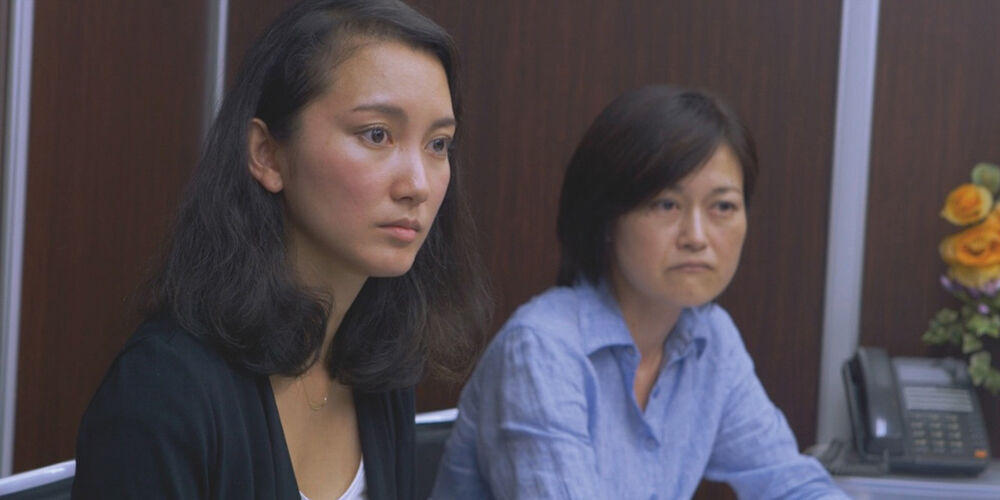
#9: THE MAN WHO COULD NOT REMAIN SILENT - 1 nomination ★★★+
This 13-minute Croatian drama from writer/director Nebojša Slijepčević, certainly falls within the trend of the 2024 short docs feeling like vignettes rather than complete stories. Still, after watching the program of all five of this year's live action entries, I found this was actually the one that stayed with me the longest. The film dramatizes the Štrpci massacre of 1993, when 18 Muslims and 1 Croat were pulled off a train by a Serbian paramilitary group and massacred in a small train station near the Bosnian territory of Višegrad. The film cleverly centers not on the one passenger who dared to stand up against this fascistic assault on civil liberties but on one of the 500 other people who witnessed the event but did little to nothing to stop it. And the ultimate outcome, which we learn is true, feels like a wake-up call for those of us who have become complacent by watching countless movies about heroic figures from the past who stood up against injustice and ultimately triumphed. It doesn't always work out that way, which is why most people keep their heads down and look away.
Like several 2024 features (I'm Still Here, The Seed Of The Sacred Fig), shorts (A Lien), and documentaries (No Other Land), this movie feels like a harbinger of events that could happen, not in some faraway country decades ago, but here and now in the USA. And like many other 2024 films whose power and meaning land exponentially harder as soon as they end and inform the viewer that we've been watching something based on a true story all this time (Kneecap, Sing Sing, Hit Man, Woman of the Hour, The Devil's Bath, The Girl with the Needle) our understanding and desire to know more about the truth of the story enhance the film a staggering amount. This was not the only movie in this year's collection of shorts that compelled me to go online and learn more about it when I got home from the theater, but it's the one that made me replay my memories of the picture over and over in my mind after learning about the incident that inspired it.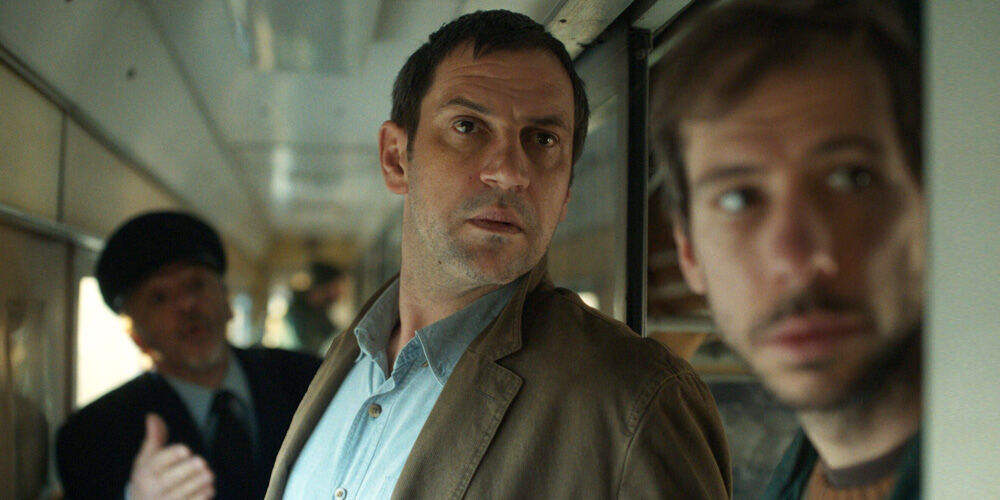
#8: A LIEN - 1 nomination ★★★+
While less profound and contemplative than fellow nominee The Man Who Could Not Remain Silent, this similarly themed American short drama, written and directed by David and Sam Cutler-Kreutz, is far more intensely visceral. It follows a couple as they navigate the clear and present danger of our modern immigration process. On the day of their green card interviews, Oscar and Sophia Gomez and their young daughter Nina arrive at the U.S. Citizenship and Immigration Services office, where they've been instructed to report for Oscar's citizenship interview. After they separate for their individual interviews, as is customary to assure the legitimacy of married couples, ICE descends on the facility, sending both Oscar and Sophia into an intense panic. This 15-minute film ratchets up the tension, never giving its characters or audience a moment to breathe or regroup. It also spends no time moralizing or messaging, allowing the events to speak for themselves. When we learn that it has been common practice for ICE agents to intercept undocumented immigrants in the very immigration offices where they are told to go when following the legal citizenship process, it underscores the constant fear and no-win situation so many law-abiding immigrants face, alongside the hypocrisy of those who claim to want to deport only those immigrants not following the proper legal channels. Even more infuriating is the knowledge that this was true under the Biden Administration when the film was made and that this type of thing is undoubtedly escalating now.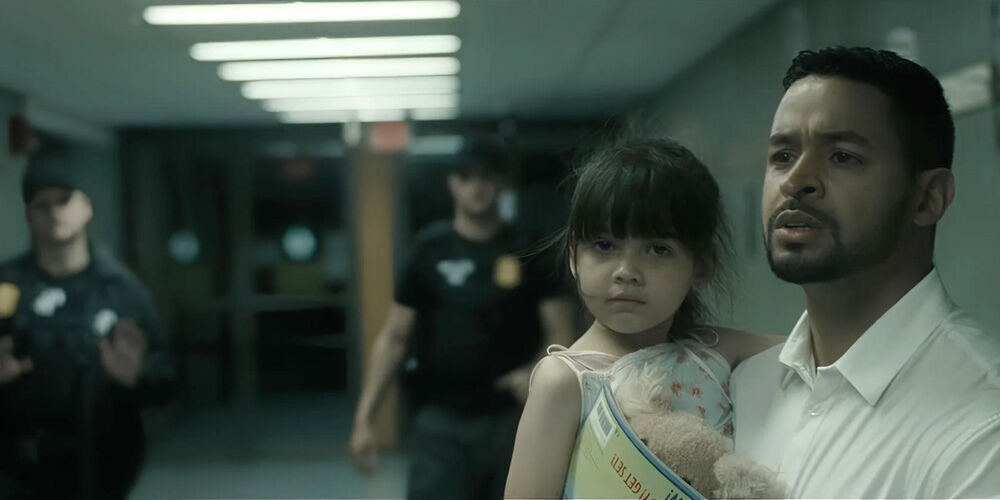
#7: I'M STILL HERE - 2 nominations ★★★+
Like the year's two best live-action shorts, this true story about the matriarch of a Brazilian family living under military dictatorship in 1970s Rio de Janeiro is indicative of a type of film we're likely to see more and more of. For decades, both Hollywood and international cinema have given us stories from the past about brave individuals standing up against autocratic regimes and oppressive systems. A side effect of these inspiring narratives is the cumulative subconscious belief that we'd all embody this type of protagonist if faced with similar situations. Many would like to think they'd be the Southern plantation owner secretly aiding the Underground Railroad, the homesteader who befriends the indigenous tribe, or the Oskar Schindler who saves 1,200 Jews during the Holocaust. In reality, though, most of us would not fit that mold, as these individuals usually face deadly consequences.
Now that we're moving beyond mere hypotheticals where we can comfortably fantasize about what we would have done and we’re entering the realm of what are we going to do when faced with these situations, film and other art forms (but especially film) should explore this theme more directly. In none of these nominated films are the protagonists depicted as cowards; rather, they're shown as individuals striving to do what they can against an unyielding force bearing a massive gun.
Walter Salles's I'm Still Here paints its protagonist, Eunice Paiva, played by Best Actress nominee Fernanda Torres, as a determined woman primarily focused on providing a sense of normalcy for her children despite their father's abduction and murder. She has to swallow and repress her rage, despair, and helplessness while caring for her family and quietly working towards government accountability and some form of truth and reconciliation. Torres is only the second Brazilian actress nominated for Best Actress; her mother, Fernanda Montenegro- nominated for Salles's Central Station in 1998- was the first (and she makes a powerful appearance at the end of this film).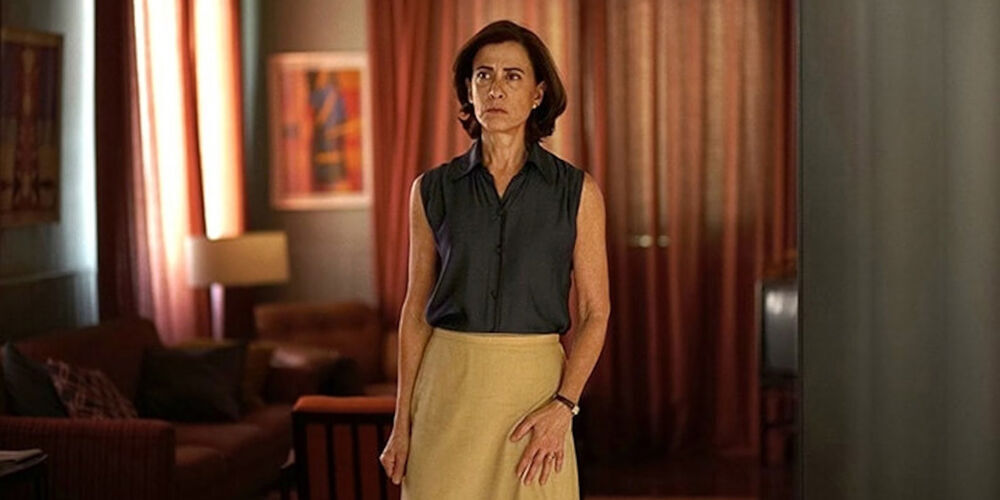
#6 ANORA - 6 nominations ★★★+
Sean Baker's wild, boisterous, poignant, and unwieldy independent screwball comedy now seems poised to win Best Picture. This winsome film has followed a fascinating journey along the awards circuit ever since it won the Palme d'Or at Cannes last summer. Once that happened, the Oscar buzz started. Still, in the history of the Oscars, only three movies- The Lost Weekend, Marty, and Parasite&- have claimed both the top prize at the prestigious French film festival and the Academy's highest honor. While Anora was a hit with audiences and critics alike, its Oscar hopes dimmed as talk quickly shifted to films more typical of the Academy membership like Conclave, The Brutalist, and Emilia Pérez. The latter seemed almost a foregone conclusion when it led the pack with the most nominations of any 2024 film.
Even when the tide turned on Emilia Pérez, the movie that appeared to ascend to the top contender spot was A Complete Unknown rather than Anora. Baker's film then failed to secure a single win among the five Golden Globes it was nominated for. However, now, with significant wins at the DGA, WGA, PGA, and Independent Spirit Awards, little Anora is back as the strongest front-runner. The fact that the Best Picture Oscar race could have primarily been between Anora and Emilia Pérez illustrates how much has changed—mostly for the better—now that the Academy's membership exceeds 10,000 and is more diverse and international than it has been since its inception.
The film has also been nominated for Best Actress (Mikey Madison) and Best Supporting Actor (Yura Borisov). Baker himself is nominated for Best Director, Original Screenplay, and Best Editing, which, along with his Best Picture nomination as one of Anora's three primary producers, places him among the ranks of Orson Welles and Warren Beatty as a rare filmmaker nominated in four Oscar categories for the same movie. However, it's possible that Anora could pull a Grand Hotel and become the second film in Oscar history to win Best Picture without winning any other Oscars. One could easily envision an outcome where Brady Corbet wins Best Director for The Brutalist, Demi Moore takes Best Actress for The Substance, Kieran Culkin clinches Best Supporting Actor for A Real Pain, and Juliette Welfling secures the only victory for Emilia Pérez. If Baker wins editing early in the evening, Anora will likely take Best Picture, which would make the show a little anticlimactic.
I can't say I love Anora as much as my friends and peers seem to; I'm afraid it's another 2024 film that feels a bit overrated. Still, I'll be thrilled if it wins the big prize. I don't always root for my favorite nominated movie to win Best Picture because, often, the film I believe is the best isn't the one that feels most representative of its year. In many ways, this screwball comedy about love, sex work, wealth inequity, and staying true to oneself in the face of overwhelmingly powerful forces feels like the choice that would embody all that was inspiring about 2024, whereas my personal pick, The Brutalist, seems thematically more reflective of everything about this year that is attempting to pull us back to a darker period in history.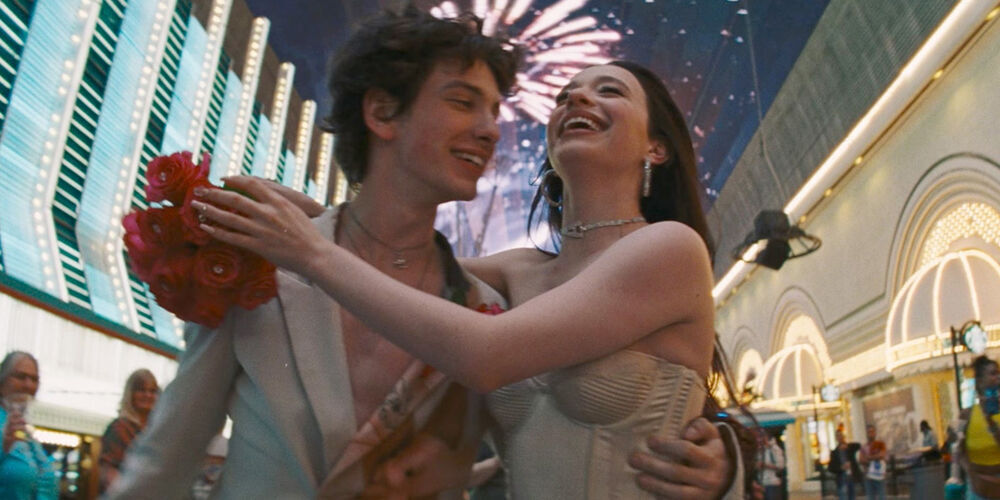
#5: INCIDENT - 1 nomination ★★★★
The best of this year's documentary shorts is also the most unusual and innovative. Artist and filmmaker Bill Morrison edits together a multi-split screen of police bodycam footage and silent traffic camera video to document the fatal police shooting of a barber on a Chicago street corner in 2018. Unfolding like a found-footage film but with real-world recordings, the short shows how rookie cops can be quick to shoot suspects, especially when tensions between police and civilians are high, and how police culture can be just as quick to protect their own in these situations. This is also a fascinating glimpse into our current era of extreme surveillance and both cameras and guns being everywhere. 2018 was the year the Chicago police department was required to publicly release bodycam footage within months of an incident like this one, rather than years—and the long delay of this type of transparency from a prior police shooting contributed to tensions being so high between Black Chicagoans and cops at the time this film's incident occurred. Some might not consider a simple collection of footage like this to be a true documentary "film," but not only does this qualify as a doc and as a film, but it's the most effective of 2024's Oscar-nominated shorts and one of the best movies of the year. Morrison uses the cinematic medium in many of the ways that make it so distinctive from every other art form, providing audiences with a much-needed, almost real-time, audio-visual example of how rapidly the truth can be manipulated, spun, and solidified into belief held by even those who participated in the event. It is equally fascinating to ponder if there are ways a filmmaker could put the same camera angles and audio recordings together to reach different conclusions than the ones that seem inescapable while watching this superb documentary short.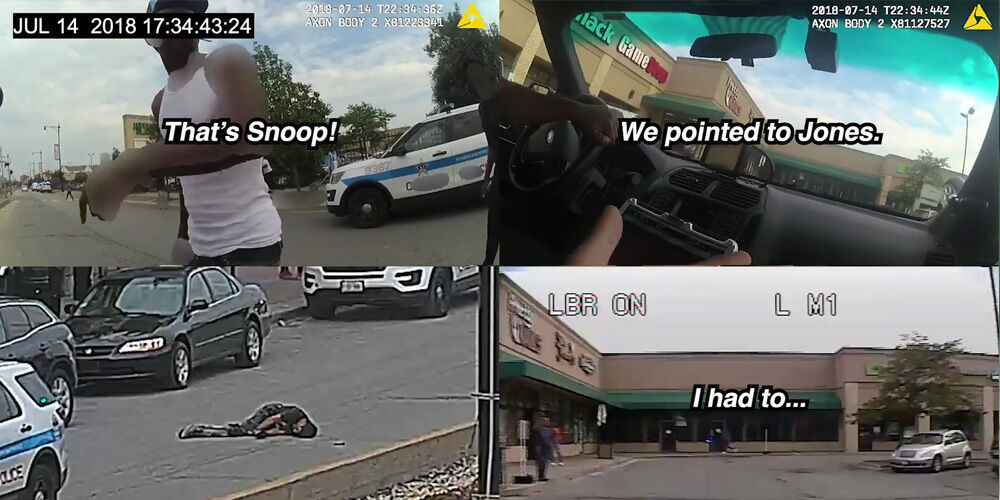
#4: THE SEED OF THE SACRED FIG - 1 nomination ★★★★
Mohammad Rasoulof's masterful political family drama/thriller may officially be Germany's entry for Best International Feature, but it is an Iranian movie in the Persian language. This riveting nail-biter explores a rift in a family that occurs when the father is promoted to a secretive position in Tehran's Revolutionary Court, mirroring the distrust and protests that are gripping the nation.
Rasoulof is not the first independent filmmaker from Iran forced to work in secret and flee his country due to his artistic output. He has repeatedly been imprisoned for violating Iranian censorship regulations with his earlier films and was banned from working in or leaving the country during the production of this one. Films made and released under such conditions are often lauded for the bravery of their creators rather than the films' inherent power, but The Seed of the Sacred Fig lands as one of the year's best pictures, independent of the extra-textual circumstances surrounding its production.
Although the movie has been a popular hit by the standards of a foreign language arthouse release, it stands as one of the few 2024 films I would call underrated. The film has many supporters and few detractors (outside of Iran), yet many find it a middling movie that takes a weird third-act turn. I couldn't disagree more strongly with sentiments like these, and I believe the climax and conclusion of this epic story are central to what makes it so remarkable. For a time, I wondered if it would even be nominated for this award. This is the 2024 international release I'm rooting for, especially since neither Agnieszka Holland's Green Border from Poland nor Radu Jude's Do Not Expect Too Much From the End of the World from Romania received nominations.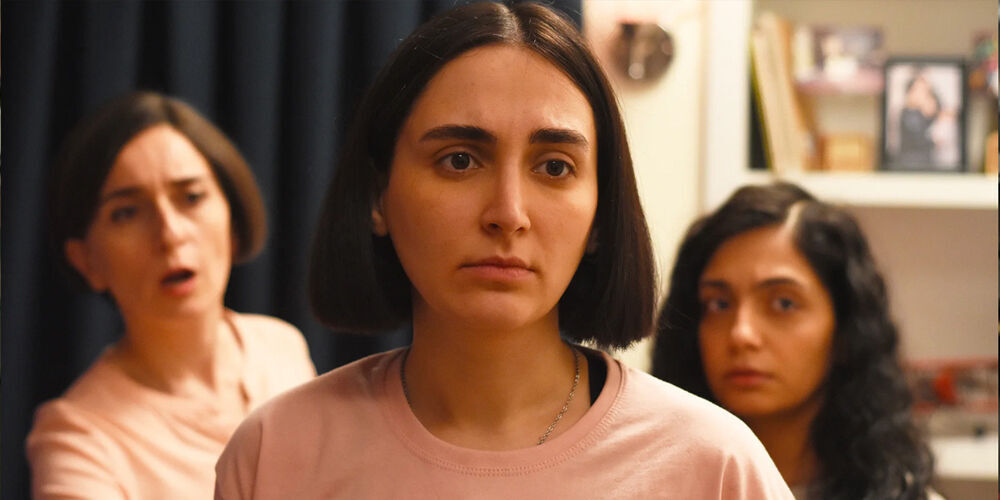
#3: A COMPLETE UNKNOWN - 8 nominations ★★★★
No one was more surprised than I as to how much I loved this film about Bob Dylan's early years in the Greenwich Village folk revival scene that culminates in his notorious electric set at the 1965 Newport Folk Festival. Since Dylan is my favorite artist and the biopic is my least favorite movie genre, I anticipated this movie with dread. That was especially true when it was announced that Timothée Chalamet was gonna play the young Bob. Not that Dylan wasn't a cute, slight boy when he first arrived in New York and made his big splash; the cover photo on his first album can attest to that. But, much as I've been impressed with much of Chalamet’s work over the years, I couldn't see Timmy as Bob.
But Chalamet threw himself into the role, becoming a Dylan obsessive, learning to sing and play in Dylan's signature styles, and publicly performing many songs from Dylan's early catalogue, not just the ones he learned for the movie but the ones that spoke most personally to him. And he did this without any of the method-like work many actors who try to transform themselves into a still living real-life person often need to do. 2024 was a major year for Chalamet. He starred in two of the most successful and acclaimed films, this and its fellow Best Picture nominee, Dune: Part 2. But while he wasn’t fully able to pull off the transition of Paul Atreides' journey from privileged youth to powerful and ruthless religious leader, he perfectly handles Dylan’s journey from a nervous, folk neophyte eager to be guided by others to the swaggering, arrogant, cocksure troubadour who knows he must be true only to himself in order to be part of the future rather than the past.
Tommy's is an inspired performance, but it pales in comparison to Edward Norton's nominated supporting turn as Pete Seeger. I don't think I'm being hyperbolic when I say that Norton gives the single greatest performance in a biopic that I've ever seen. Never has an actor I’m so well acquainted with disappeared so rapidly into the role of someone I admire so deeply. It took me at least three or four minutes to adapt to Meryl Streep when she played Julia Child—probably my benchmark for this type of turn—but within seconds of seeing Norton as Seeger, hearing him speak and sing while frailing his banjo, I was sold. And each time he reenters the story, he adds another unexpected layer to the portrayal. He manages all the best things the key supporting player in a biopic can do, acting as both a contrast to, an enhancement of, and an honest reflection for the lead. Norton has always been a great actor, but he's hardly the person I would have chosen to play the soft-spoken Seeger. But now that I've seen it, I can't think of a better choice. I later learned that he was a last-minute replacement for director James Mangold's original selection, Benedict Cumberbatch. That this casting change occurred may be the principal reason this movie succeeds as well as it does.
Still, the reason Norton is so exceptional in the role isn't just his ability to capture the spirit of the great folk music pioneer and peaceful crusader. A great deal is in the writing of the character and the structuring of the script. The way Mangold introduces Seeger early in the movie, in a courtroom at the end of a trial for his defiance about answering questions from the House Unamerican Activities Committee, enables us to be instantly inside the man, witnessing everything he believes and stands for, and the pleasant, folksy way he expresses it. Watching this scene for the second time, it occurred to me that one of the reasons it takes so long to acclimate to most celebrity biopic performances is that nine times out of ten the character is literally introduced by discovering the actor in the middle of a conversation and then having him turn to another character and say something along the lines of, “Hi, I'm so and so.” A Complete Unknown is not above this kind of sloppy, Easter-eggy intros, but fortunately not for any of its major characters.
Mangold and film critic and Scorsese collaborator Jay Cocks are nominated in the Best Adapted Screenplay category, as their script is technically based on the book Dylan Goes Electric! by Elijah Wald. I've read that book, and I'm not sure if the adaptation credit is a legal thing or if they actually relied on it as their prime source material. They use nothing of Wald's structure, other than his focus on Seeger. Perhaps that book's detailing of the many conflicting accounts of exactly what went down in Newport in 1965 was helpful, but they seem to use whatever tales they want to use without much concern for being 100% accurate. Quite the contrary, this screenplay does a remarkably good job at what the best fictionalized tellings of true stories can do. It dispenses with any kind of formal fidelity to the facts and concentrates on capturing the essence of what happened in a way that feels true in spirit. The prime example is how Seeger is used as a character in this film. The real man was never any kind of formal mentor to Dylan, but he was the patriarch of this whole movement, and therefore, how he is utilized as a character in this story feels authentic.
One place A Complete Unknown comes up a little short is the way it pays short shrift to how the two key women in Dylan's life at the time, Joan Baez and Suze Rotolo, steered him into writing political songs. Their influence is what led to him being called the voice of his generation and his subsequent rejection of that label. The basics are there, but the movie misses out on its chance to explore this as fascinatingly as it covers the other key aspects of this period in Dylan's life. Therefore, Monica Barbaro's Supporting Actress nomination for playing Baez is perhaps the least expected of the film's eight nominations. But she put across the sexy, confident, and self-directed individual Baez was during this era, and it's smart that Barbaro doesn't go too overboard in terms of an impression when she's singing, as trying to mimic Joan Baez's vocals exactly will inevitably end up sounding like a parody or worse. The film is also nominated for its costumes, which blessedly don't look like they were all worn for the very first time in each scene, as the clothes in so many period pieces do. And the sound! I can't tell you how thrilled I am to see a sound award for a movie that doesn't feature 100,000 tracks of explosions, lasers, engines, and droning synthesizers. This is a movie that actually uses silence as part of its sound design—what a concept! Most impressive is how the music is recorded, much of it live. In a year of multiple musicals that seem like their directors and editors are trying to disguise the fact that the films are musicals, a film about a singer/songwriter that allows the audience to just watch and listen to him sing long stretches of his lengthy songs is a welcome change of pace.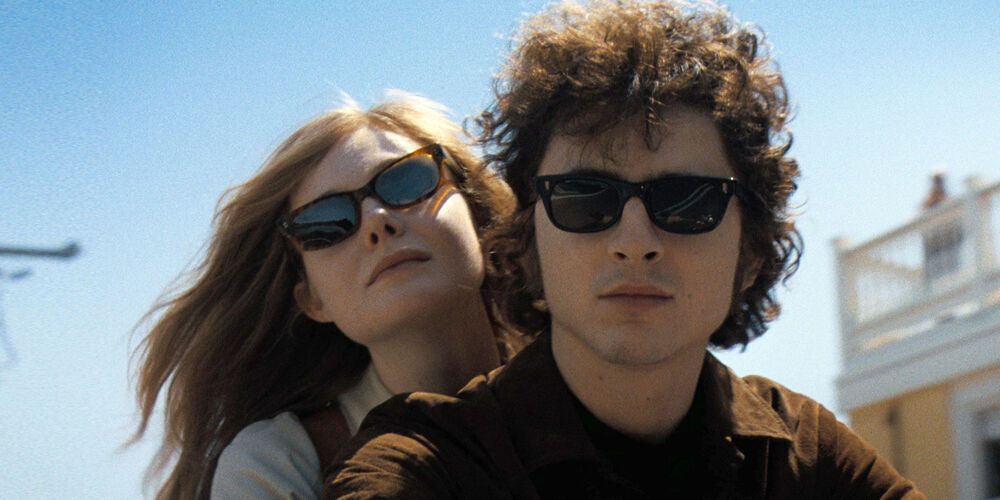
#2: NO OTHER LAND - 1 nomination ★★★★
This year's best documentary is not the first film made by a team of Israelis and Palestinians working together to document the occupation and destruction of Palestinian homes by Israeli soldiers over an extended period. The Oscar-nominated 5 Broken Cameras by Emad Burnat and Guy Davidi is probably the most high-profile example, but many fiction and non-fiction films on this subject showcase this kind of partnership. Still, this documentary, which chronicles the destruction in Masafer Yatta in the occupied West Bank, is perhaps the most powerful film on this subject I've yet seen.
Much of the film's impact arises from the unique involvement and partnership of the four credited writer/editor/directors. Basel Adra, one of the film's main subjects, is a young Palestinian activist who has been resisting the forced displacement of his people in this region since childhood. Yuval Abraham, another key figure, is a Jewish Israeli journalist covering this struggle. Along with Hamdan Ballal and lead cinematographer Rachel Szor, they tell the story of this area in the West Bank where Palestinian farmers have lived for generations while Israeli soldiers have been demolishing homes and trying to drive out the inhabitants for many years. These efforts have intensified as the Israeli military decided to utilize the land for training.
Although it spans twenty years rather than twenty days, No Other Land evokes the prior year's Oscar-winning documentary feature 20 Days in Mariupol, with its on-the-ground journalists urgently trying to get footage and stories of atrocities out to the world without assurance that these images and narratives will influence public opinion. The situation deteriorates throughout the film, though it still maintains hope that awareness and international action could lead to change. It is a somber and, at times, harrowing movie to watch, but it is also inspiring to see these filmmakers staying the course and maintaining their optimism, if only sometimes by the strength of their personal connection and commitment to completing and promoting the film.
No Other Land stands as a prime example of why the Oscars still matter. Despite being one of the year's most acclaimed films, it struggled to find a U.S. distributor willing to take it on in the current political climate. The film's Oscar nomination for Best Documentary Feature provided the filmmakers with enough influence to self-distribute in major cities, often in the smaller cinemas of art house theaters like The Film Forum in NYC (where I saw it) and the screening room at Boston's Coolidge Corner Moviehouse (a room so small and cramped I consider it an insult to every movie that plays there). Still, it's encouraging that audiences are coming out to see this movie, and if it wins, exponentially more people will become aware of it.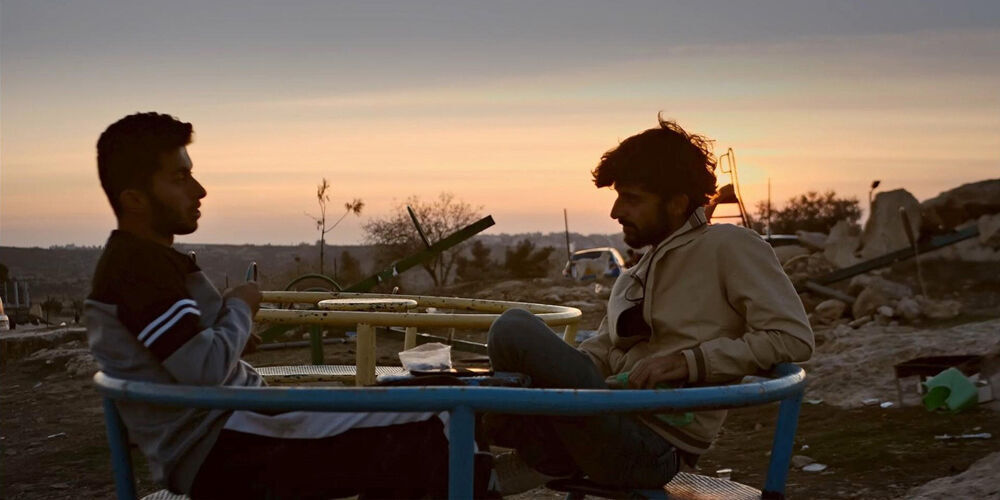
#1: THE BRUTALIST - 10 nominations ★★★★
I honestly can’t tell how much this movie's position at the top of my list relates to its content versus its presentation. It is an excellent American story about the post-WWII immigrant experience, the tenuous relationship between art and commerce, and the struggle to escape profound trauma while never entirely becoming free of it. After all the unexpected praise I found for this year's biographical films that subverted the restrictive and artificial Hollywood biopic genre, The Brutalist demonstrates many of the reasons why telling a fictional historical story can be the ultimate way to break free of those rigid confines. Filmmakers don’t have to adhere to any established truths, legends, or legacies of fictional characters, which allows them to access thematic truths about a time, place, and lived experience more directly and deeply.
But I perhaps loved Brady Corbet's movie even more because experiencing this near-four-hour epic in flawless 70mm projection at a packed preview screening in the main moviehouse of my favorite theater with 800 fellow Boston cinephiles made me feel like movies could once again be events. The picture’s old-fashioned approach to storytelling, production, and exhibition sparked my excitement. Rather than being mere escapist fluff, the movie addresses issues that are both timeless and acutely timely.
Adrien Brody delivers a richly deserved Best Actor-nominated performance as a visionary Hungarian-Jewish architect named László Tóth, who flees post-war Europe in 1947 to build a new life in Pennsylvania. Felicity Jones is nominated for Supporting Actress for her role as his journalist wife, who joins him after the war, and Supporting Actor Guy Pearce gives the best of the three nominated performances as the wealthy, mysterious benefactor who commissions László to design and build a monumental community center in the architect's signature brutalist style. Complications of class, ethnicity, and sexuality arise, leading us to question whether the building will make or break the visionary man who designed it. It's fitting that a film about an architect is the one movie I've seen in the last twenty-five years that genuinely understands what cinematic "world-building" means. Perhaps it shouldn't be surprising that a post-WWII period piece, rather than a sci-fi or fantasy movie, knows best how to transport a viewer into an unfamiliar world. The Pennsylvanian site-specific detail highlights the film's historical, political, stylistic, and thematic concepts. That the movie should receive nominations for its Production Design as well as its Original Screenplay feels more than appropriate, as they unify beautifully with the epic picture's direction, editing, and scoring, which are also nominated.
Perhaps Best Cinematography is the award this movie will claim. Corbet's choice to revive the long-dormant VistaVision process, a high-resolution widescreen format, stemmed from the process's ability to capture a wide field of view without using wide-angle lenses. In press statements, Corbet explained that VistaVision was perfect for architectural photography and that it "just seemed like the best way to access that 1950s period was to shoot on something that was engineered in that same decade." While the need for VistaVision is a bit dubious, and Corbet's insistence on resurrecting the process may seem a bit grandiloquent, I admire his ability to take this on and achieve the vision. This is essentially a small indie movie, yet it looks and sounds like the biggest prestige picture of the year.
I'm astonished that a relatively unestablished filmmaker like the 36-year-old Corbet—who started as an actor in small arthouse movies and has only directed two previous features—can revive a long discarded technology and produce an epic drama that requires a special theatrical rollout on a budget of less than $10M. With The Brutalist, Corbet has significantly shaken up the struggling film industry and illustrated what can be achieved even when all evidence suggests there's no market for it.
The Brutalist isn't going to make anyone rich, but it stands as one of the year's most enriching pictures. Watching it on the closing night of my beloved local independent film festival in the 110-year-old movie theater that I love so much that I've recently become one of its main stewards reminded me that there are still folks out there making meaningful films and even more people who are eager to watch them. That night, regardless of what the 800+ attendees at that screening thought of The Brutalist, there was no question about their love for movies, and I felt a kinship with every single one of them. It's the same feeling I often get when I gather with friends to watch the Academy Awards, the one night where it seems like everyone wants to talk about movies!